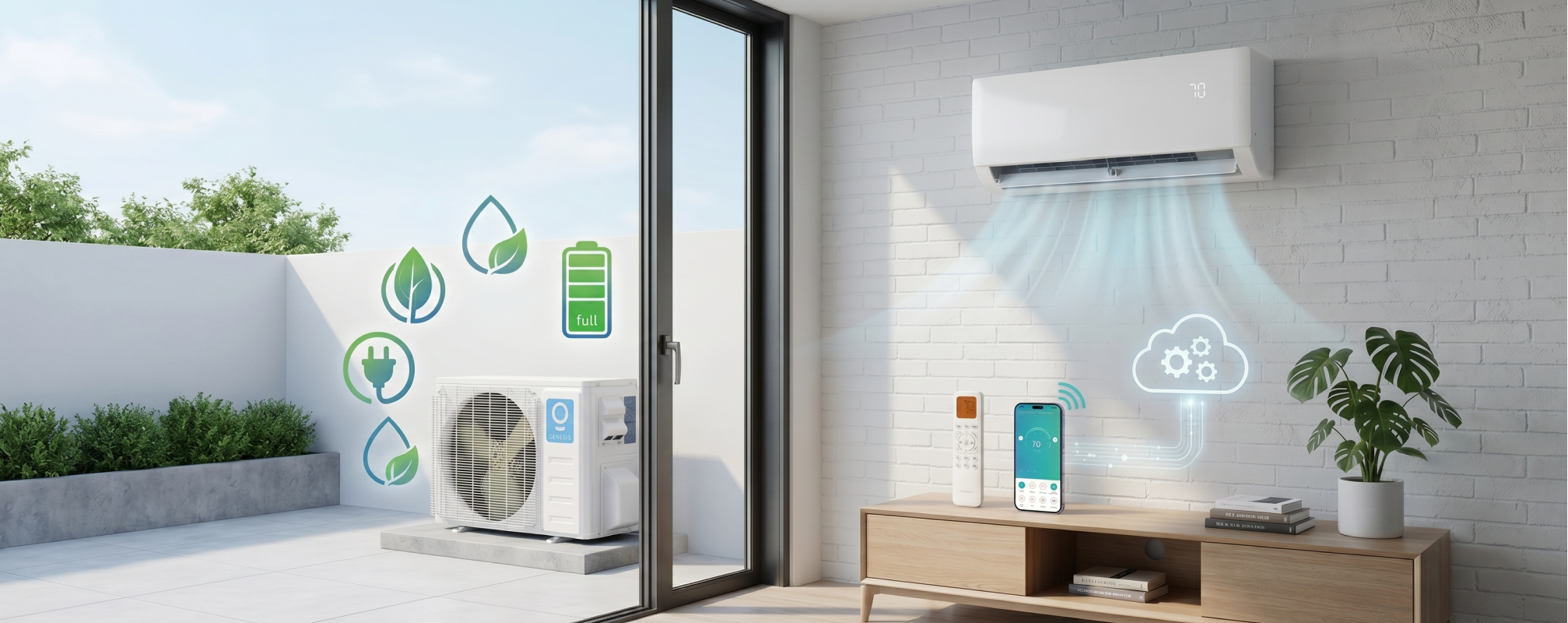
Mini split systems have become one of the most popular solutions for energy-efficient heating and cooling. They're flexible, quiet, and highly efficient. But many homeowners still wonder: Do mini splits automatically turn off once the desired temperature is reached?
The short answer is: not always.
Some systems shut off completely, while most modern mini splits continue running at a lower capacity to maintain consistent comfort.
Let's break down how mini splits regulate temperature and what actually happens when your room reaches the set point.
How Mini Splits Control Room Temperature
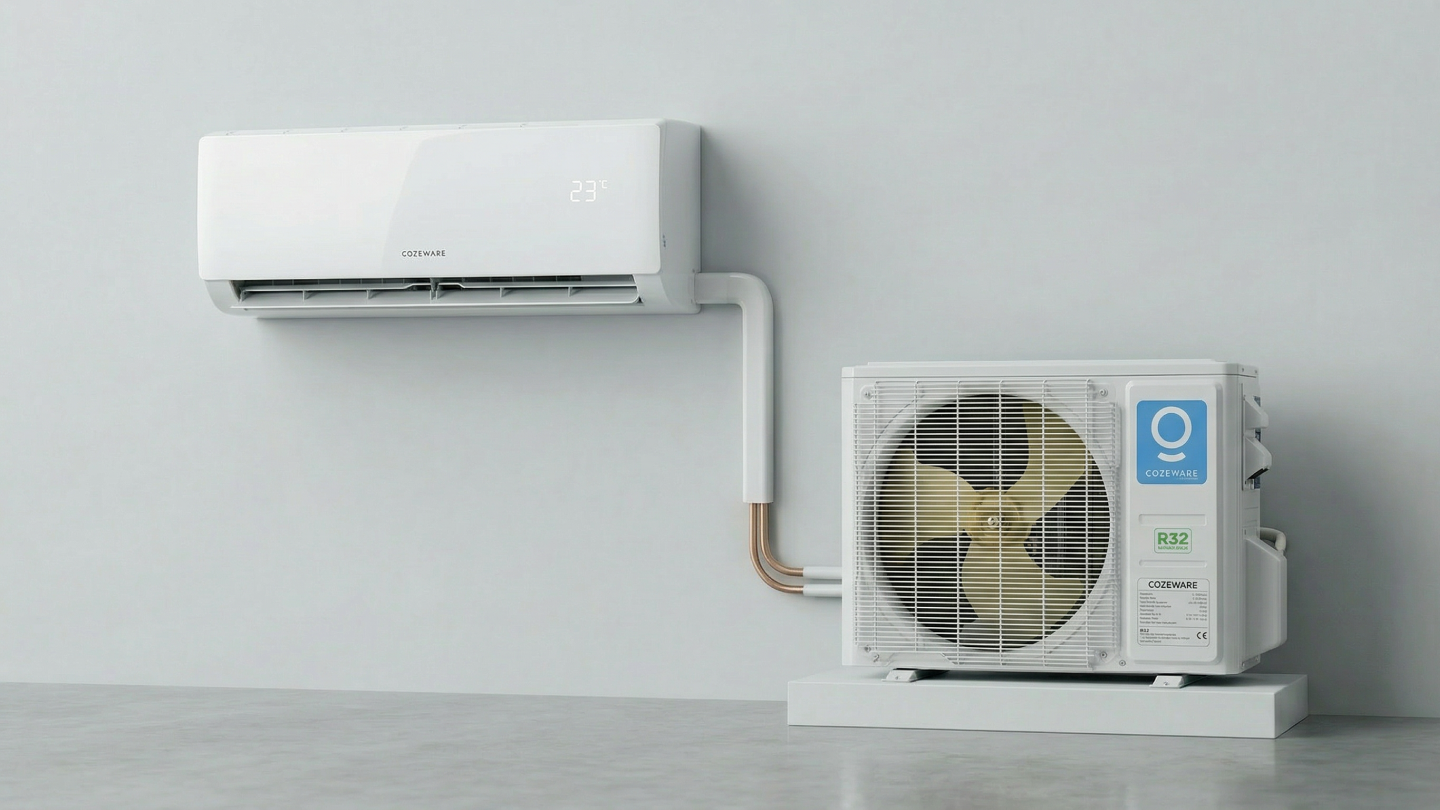
A mini split system consists of two primary components:
-Outdoor unit (compressor)
-One or more indoor air handlers
These units are connected by refrigerant lines that transfer heat between indoor and outdoor spaces. Each indoor unit includes temperature sensors and is controlled by a remote or wall-mounted thermostat.
When you set your desired temperature, the system monitors the room continuously and adjusts its output accordingly.
The key difference between traditional HVAC systems and modern mini splits lies in inverter technology.
Traditional (Non-Inverter) Systems vs. Inverter Systems
Non-Inverter Mini Splits
Traditional systems operate using a simple on/off cycle:
The compressor runs at full capacity.
The room reaches the set temperature.
The system shuts off completely.
4.When the temperature drifts, it starts back up at full power.
This cycle repeats throughout operation.
Inverter Mini Splits
Most modern mini splits use inverter technology. Instead of shutting off completely, the compressor adjusts its speed based on demand.
When the set temperature is reached:
The compressor slows down.
The indoor fan reduces airflow.
The system continues running at low capacity.
Rather than stopping entirely, it maintains the temperature steadily.
If the room temperature begins to rise or fall, the system gently increases output just enough to restore comfort. Once stabilized, it slows down again.
This is why many homeowners notice that their mini split seems to "run all the time." It's not malfunctioning — it's operating exactly as designed.
Why Mini Splits Rarely Shut Off Completely
Continuous low-speed operation may seem unusual at first, but it's actually more efficient. Here's why:
1. Lower Energy Consumption
Starting a compressor from a full stop requires a surge of electricity. Running continuously at low speed typically uses less energy than repeatedly shutting off and restarting.
In fact, inverter mini split systems can reduce energy consumption by up to 30–40% compared to conventional HVAC systems.
2. More Stable Indoor Temperatures
Traditional systems often cause noticeable temperature swings — too cool, then too warm.
Inverter-driven mini splits maintain consistent comfort by making subtle adjustments instead of drastic on/off cycles.
3. Reduced Wear and Tear
Frequent cycling places stress on mechanical components. By operating smoothly at variable speeds, mini splits reduce strain on the compressor and extend system lifespan.
4. Quieter Operation
When running at reduced capacity, mini splits are extremely quiet. This makes them ideal for bedrooms, offices, nurseries, and living spaces where noise matters.
What Happens in Multi-Zone Systems?
Multi-zone mini split systems allow multiple indoor units to connect to a single outdoor compressor. Each indoor unit can have its own temperature setting.
However, there's one important limitation:
All indoor units must operate in the same mode — either heating or cooling — unless the system is specifically designed to support simultaneous heating and cooling.
The advantage of multi-zone systems is that you only condition the spaces you're using. This improves efficiency and gives homeowners greater control over individual rooms.
Should You Manually Turn Off a Mini Split?
In most cases, you don't need to frequently turn your mini split on and off.
Because inverter systems are designed for continuous, low-speed operation, they're often more efficient when maintaining a steady temperature rather than being powered down and restarted multiple times a day.
However, you may choose to turn the unit off if:
You'll be away from home for an extended period.
Outdoor temperatures are mild and conditioning isn't necessary.
You want to conserve energy during travel.
For everyday use, many homeowners prefer the "set it and forget it" approach.
Signs Your Mini Split Is Working Properly
Here are some normal behaviors you might notice:
The system continues running even after reaching the set temperature.
Airflow becomes gentler once the temperature stabilizes.
The outdoor unit runs quietly at lower speeds.
The room temperature remains consistent without noticeable swings.
These are signs that the inverter technology is functioning correctly.
If your system runs constantly but never reaches the set temperature, or if energy bills increase unexpectedly, it may be time for a professional inspection.
Final Words
So, do mini splits turn off when the temperature is reached?
Sometimes — but not usually with modern systems.
Traditional non-inverter units may shut off completely, but most inverter-driven mini splits continue operating at reduced capacity to maintain steady comfort.
What may seem like constant operation is actually a smart, energy-efficient design that delivers:
Stable temperatures
Lower energy usage
Reduced mechanical strain
Quiet performance
With the right system in place, you can enjoy consistent comfort and improved energy efficiency year-round — without worrying about whether your system should be turning off.