If you are wondering how many watts does a mini split use, you are not alone. Understanding mini split power consumption is key to managing your cooling costs and avoiding high bills. Many homeowners overlook how mini split electricity usage can vary based on size, efficiency, and daily habits. In this guide, we will break down what affects energy use and share practical tips to help you stay cool while lowering your electricity bill.
Understanding Mini Split Power Consumption Basics
Power consumption refers to the amount of electricity a device uses while operating. It is typically measured in two ways:
Watt (W), which shows how much power is being used at a given moment, and
kilowatt-hour (kWh), which represents the total energy consumed over time and is what appears on your electricity bill.
For example, if a mini split AC uses 1,000 watts (1 kW) and runs for one hour, it consumes 1 kWh of electricity. So when we talk about mini split power consumption, we mean how much electricity the unit uses during operation and how that impacts your overall energy costs.
How Many Watts Does a Mini Split Use at Home?
When choosing an efficient cooling system, many homeowners ask, “how many watts does a mini split use” in everyday situations. The answer depends on several factors, but understanding how these systems consume energy can help you manage your electricity costs more effectively.
Mini Split Power Consumption: What You Need to Know
Mini Split Power Consumption refers to how much electricity your mini split uses while operating, usually measured in watts. This energy usage, or power usage, typically ranges between 500 and 1,500 watts depending on the unit's size and capacity.
Smaller systems designed for compact spaces use less power, while larger units for bigger rooms naturally require more energy. However, modern inverter technology allows the system to adjust its output, meaning it won't always run at maximum wattage, helping optimize overall energy consumption.
Key factors that affect it include:
Unit size and capacity (BTU)
Room size and layout
Energy efficiency rating (SEER/SEER2)
Temperature settings and usage habits
Quality of insulation and installation
Mini Split Electricity Usage and What Impacts It
While wattage shows instant power use, Mini Split Electricity Usage reflects how much energy is consumed over time. This is typically measured in kilowatt-hours (kWh), which directly impacts your electricity bill. In real-world use, Mini Split Electricity Usage is often lower than expected because the system reduces power once the desired temperature is reached and maintains it efficiently.
Instead of running at full capacity all the time, modern inverter systems adjust their output to match the room's needs, making them more energy-efficient compared to traditional AC units. This means the actual cost of running a mini split can be more manageable than the maximum wattage might suggest.
How Mini Split Electricity Usage Is Calculated
Electricity usage depends on both the wattage of the unit and how long it runs. For example, if a mini split uses 1,000 watts and operates for one hour, it consumes 1 kWh of electricity.
However, since most units cycle down after reaching the desired temperature, the average usage is often lower. Factors like daily runtime, thermostat settings, and climate conditions all influence total energy consumption over time.
Why Mini Split Electricity Usage Varies
Not all homes will have the same energy usage, even with identical units. Differences in room size, insulation quality, and usage habits can significantly affect consumption. Homes with better insulation retain cool air more effectively, reducing the need for the system to work harder.
Similarly, setting a moderate temperature and using energy-saving modes can help keep electricity usage lower, while extreme settings and long operating hours will increase overall consumption.
How Much Energy Does a Mini Split Use? Factors That Affect It
The total energy a mini split uses depends on several factors, including room size, insulation, and daily usage habits. When asking “How Much Energy Does a Mini Split Use”, it's important to understand that running the unit for longer hours or setting very low temperatures will increase consumption.
On the other hand, moderate settings and proper insulation can significantly reduce energy use. This means two households with the same unit may have very different electricity bills.
Mini Split Watts Per Hour Explained by BTU Size
On average, Mini Split Watts Per Hour ranges from about 500 to 1,500 watts depending on the unit size. For example, a 9,000 BTU unit may use around 500–800 watts, while a 12,000 BTU system typically consumes about 800–1,200 watts.
Larger units like 18,000 BTU can use up to 1,500 watts, and a 24,000 BTU system may reach approximately 1,800–2,500 watts or more.
However, thanks to inverter systems, the actual average usage is often lower, typically around 600–800 watts during regular operation, as the unit adjusts its power based on the room’s temperature instead of running at full capacity all the time.
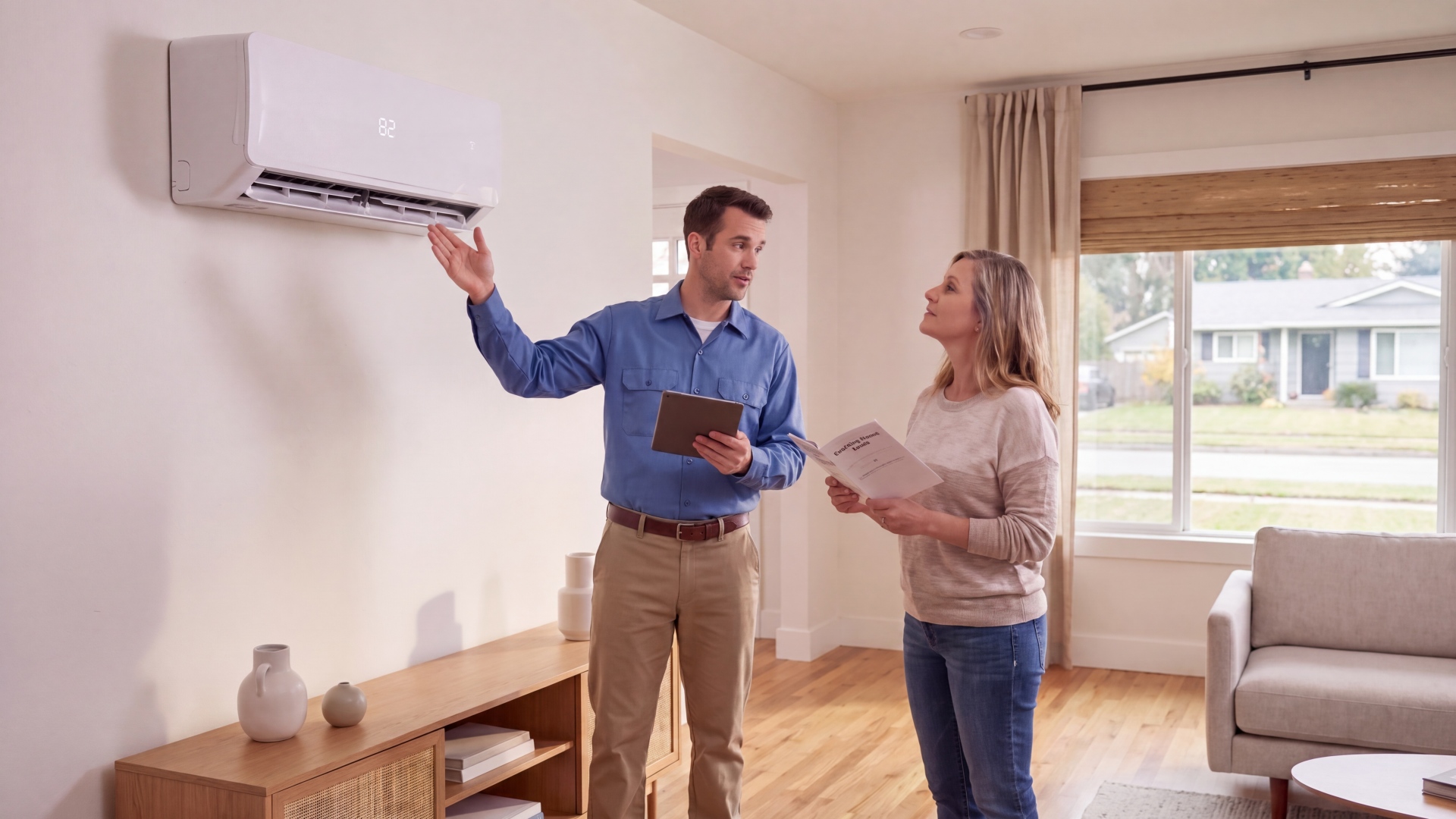
Energy Efficient Mini Split: Tips to Maximize Efficiency
Energy efficiency plays a key role in reducing electricity costs, especially when using an energy efficient mini split system. Units with higher SEER or SEER2 ratings are designed to deliver better cooling performance while using less energy.
To maximize efficiency at home, consider the following:
● Choose the correct unit size for your space
● Use energy-saving or eco modes
● Set a moderate temperature instead of extreme cooling
● Clean filters regularly for optimal airflow
● Ensure proper installation and insulation
By understanding mini split power consumption and how mini split electricity usage works, you can make smarter decisions and keep your home comfortable without driving up your energy bills with an energy efficient mini split.