
Understanding how to choose SEER rating is essential when selecting an air conditioning system that balances comfort and energy costs. If you've ever wondered what SEER rating do I need, the answer isn't simply choosing the highest number it depends on climate, usage, and long-term efficiency goals.
SEER (Seasonal Energy Efficiency Ratio) measures how efficiently an AC unit performs over an entire cooling season. A higher rating indicates better cooling output per unit of energy used. However, the best SEER rating for home varies based on your situation, and determining is higher SEER worth it requires a closer look at cost versus savings. This SEER rating buying guide will walk you through the key factors and explain the recommended SEER rating by climate.
What SEER Rating Do I Need?
One of the most common questions homeowners ask is what SEER rating do I need when upgrading or installing a new AC system. The answer depends on several key factors, including your cooling habits and local conditions.
SEER is calculated by dividing total cooling output (BTUs) by total energy consumption (watt-hours). In simple terms, it reflects your system's cooling efficiency rating or energy performance level. These are commonly used as alternative terms for SEER.
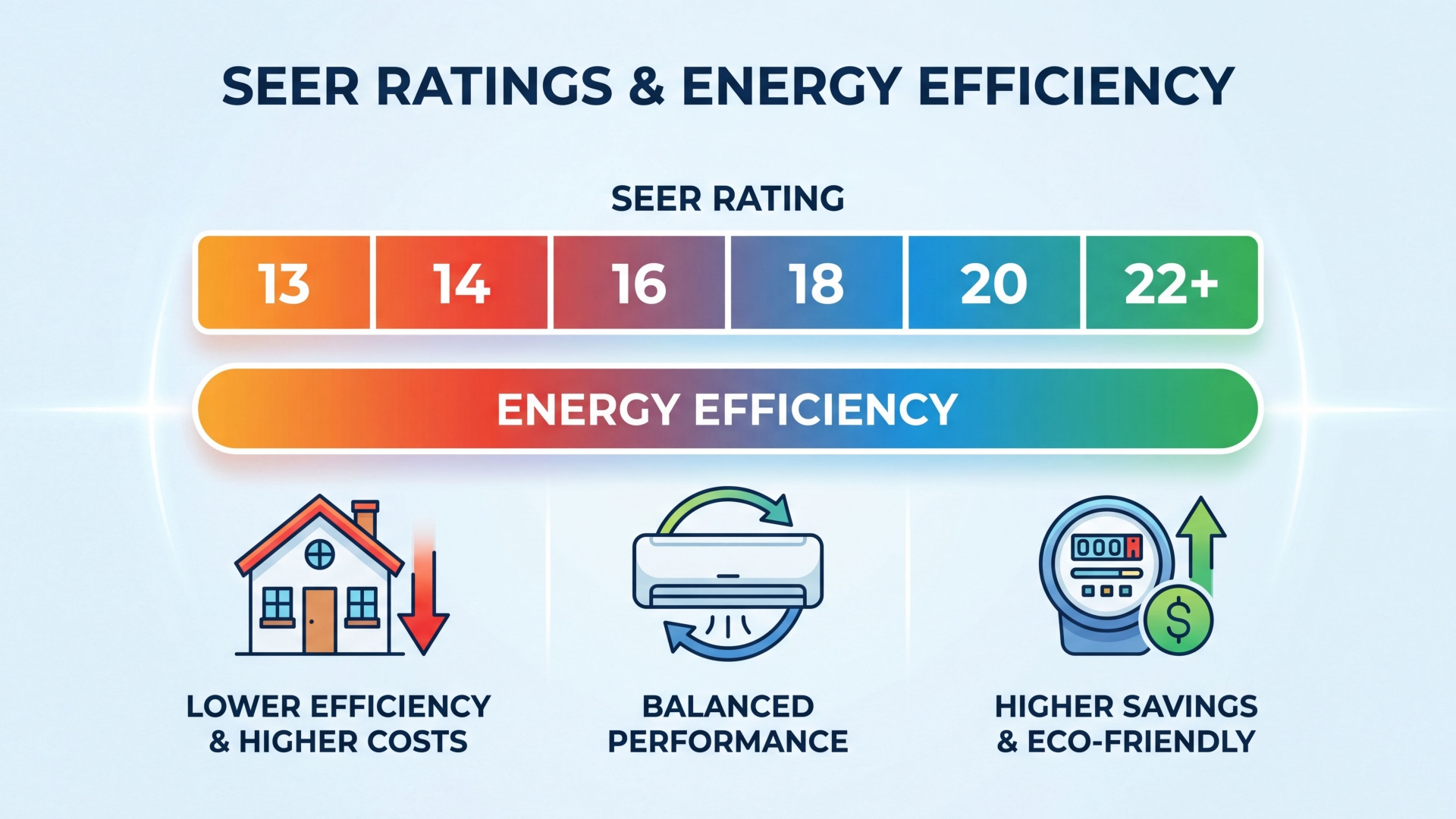
Typical SEER ranges include:
13–15 SEER → Basic efficiency level
16–18 SEER → Balanced energy performance
19–22+ SEER → High-efficiency systems
To determine your ideal SEER rating or recommended efficiency level, consider:
Frequency of AC usage
Electricity cost in your area
Home insulation quality
Duration of hot seasons
Choosing the right SEER level is especially important if your AC runs daily, as it can significantly reduce long-term energy costs.
Best SEER Rating for Home
Selecting the best SEER rating for home involves balancing upfront investment with long-term savings. While high-efficiency units sound appealing, they aren’t always the most practical choice.
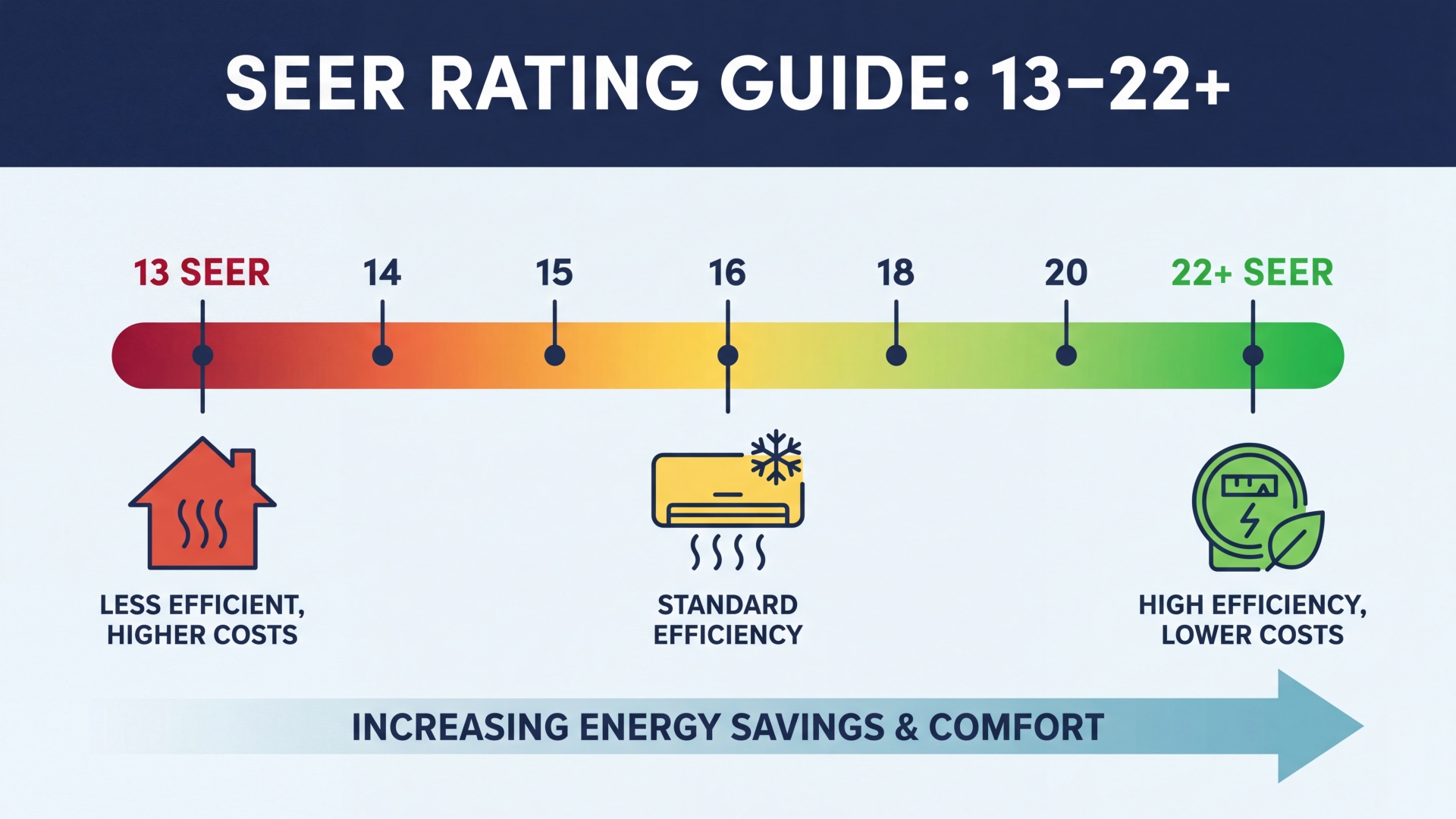
General recommendations based on optimal SEER rating or ideal efficiency level:
Mild climates: 14–16 SEER
Moderate climates: 16–18 SEER
Hot climates: 18–21+ SEER
A higher cooling efficiency rating is especially beneficial in homes with heavy AC usage. However, if your cooling needs are minimal, a mid-range system may serve as a more efficient home cooling option.
Other factors to consider:
Home size and layout
Sun exposure and window placement
Insulation quality
Proper system sizing
Choosing the ideal SEER range ensures your system delivers both comfort and value.
Is Higher SEER Worth It?
Many homeowners ask, is higher SEER worth it, especially when comparing upfront costs. The answer depends on your long-term plans and how frequently the system will operate.
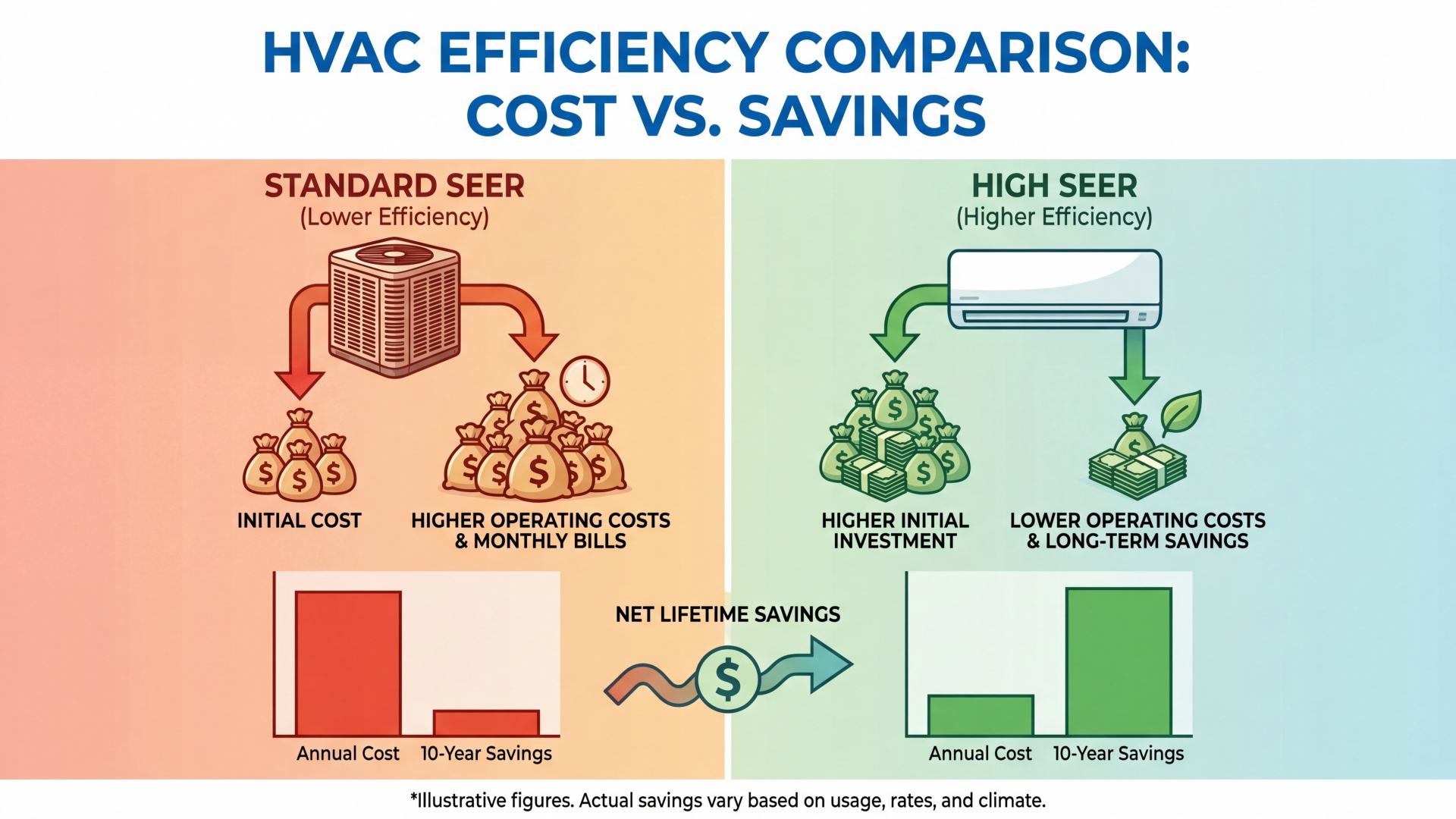
Benefits of a high-efficiency AC system or advanced SEER unit include:
Lower monthly electricity bills
More consistent indoor temperatures
Reduced environmental impact
Quieter performance
However, there are also drawbacks:
Higher initial purchase cost
Longer return on investment in cooler climates
Upgrading to a higher efficiency rating system can significantly reduce energy usage, but actual savings vary. For homeowners planning to stay long-term, investing in a premium SEER system is often worthwhile.
Recommended SEER Rating by Climate
The recommended SEER rating by climate is one of the most important factors when choosing the right system. Different regions have different cooling demands, making climate-based efficiency rating or regional SEER recommendation essential.
Climate-based recommendations
Cool regions:
13–15 SEER is sufficient for low cooling demand areas
Temperate regions:
15–17 SEER works well for moderate climate efficiency needs
Hot or tropical regions:
18–22+ SEER is ideal for high cooling demand environments
In warmer climates, AC systems run longer, making regional efficiency standards more important for maximizing savings.
SEER Rating Buying Guide
This SEER rating buying guide helps you make a well-informed decision when selecting an air conditioning system.
Key Considerations:
Upfront Cost vs Savings
Higher SEER units cost more initially but reduce long-term energy bills
Usage Patterns
Frequent AC use justifies higher efficiency
System Lifespan
Long-term use increases return on investment
Installation Quality
Poor installation reduces efficiency—even with a high SEER rating
Available Incentives
Some systems qualify for rebates or financial incentives
Practical Tips:
Don't automatically choose the highest SEER
Match the system to your climate
Focus on long-term value
Use this SEER selection guide as a reference
Follow practical AC efficiency buying tips
Conclusion
Learning how to choose SEER rating helps you make smarter HVAC decisions. By understanding what SEER rating do I need, you can avoid overspending while still improving comfort.
The best SEER rating for home depends on your climate, usage, and budget. Evaluating is higher SEER worth it and following the recommended SEER rating by climate ensures you choose wisely.
Use this SEER rating buying guide to confidently balance efficiency, cost, and long-term savings for your home.