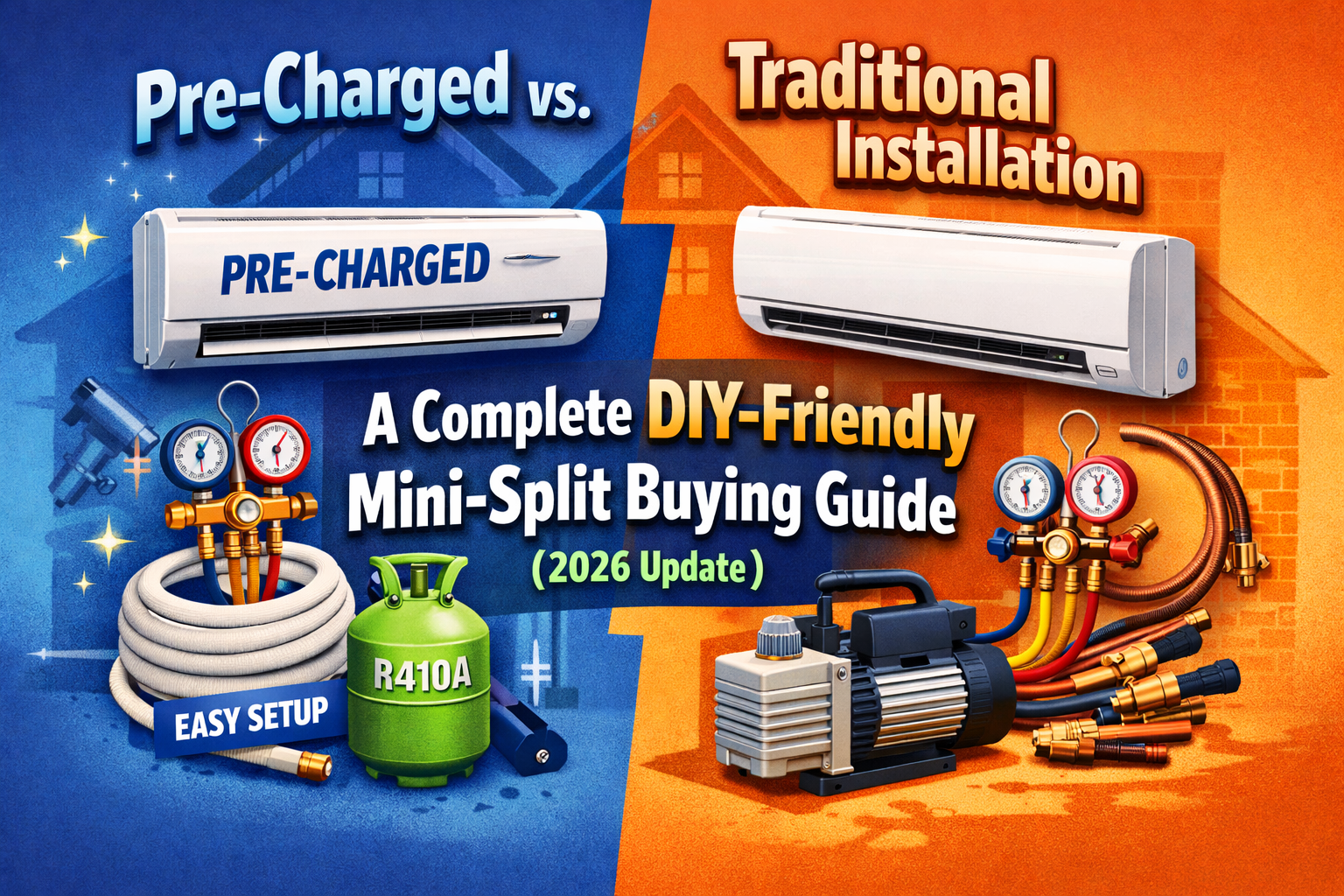
Introduction — Why DIY Mini-Splits Are Taking Over
In recent years, DIY-friendly mini-split systems have exploded in popularity across the U.S. Homeowners, renters, and small businesses are searching for cooling and heating solutions that are affordable, easy to install, and energy efficient. With installation costs rising and HVAC technician availability limited, more people are now comparing two main options:
Pre-charged mini-splits (DIY-ready)
Traditional mini-splits (professional installation required)
This guide breaks down everything you need to know—costs, difficulty, performance, and which option is truly best for your home.

What Is a Pre-Charged Mini-Split?
A pre-charged mini-split comes with refrigerant already sealed inside the line set, meaning you don’t need to handle refrigerant, vacuum pumps, or specialized HVAC tools. Just mount, connect, tighten—done.
Best for:
Renters
Small homes or apartments
Garages, offices, workshops
First-time DIYers

What Is a Traditional Mini-Split Installation?
Traditional mini-splits require a licensed HVAC technician. Installation usually includes:
Vacuuming the system
Flaring copper pipes
Handling refrigerant
Pressure testing
Custom line lengths
This allows more customization and better performance for large spaces or complex layouts.
Cost Comparison
| Item | Pre-Charged | Traditional |
| Equipment Cost | Lower | Medium–High |
| Installation Cost | $0 (DIY) | $800–$2,000+ |
| Tools Required | Very few | Several specialized HVAC tools |
| Hidden Fees | Almost none | Permits, refrigerant refill, line-set extensions |
Installation Difficulty
Pre-Charged Mini-Split — Easy DIY
No refrigerant handling
No vacuuming
Safe for beginners
Installable in 1–3 hours
Traditional Mini-Split — Skilled Technician Required
Unsafe for non-professionals
Requires knowledge of refrigerant laws
Errors can affect performance or damage the compressor
Performance & Efficiency
Both types can offer high efficiency (SEER 18–25+).
However:
Performance strongly depends on installation quality.
Traditional systems allow longer line runs and multi-zone setups.
Pre-charged systems perform exceptionally well for single rooms or small spaces.
Maintenance & Longevity
Pre-Charged:
Easy filter cleaning
Low-maintenance
Fewer points of failure
Traditional:
May require periodic service
Better for long-term, heavy use
Which One Should You Choose?
Tight budget → Pre-Charged
Renters / temporary setups → Pre-Charged
Large homes → Traditional
Extreme cold → Traditional or premium pre-charged
Complex layouts → Traditional
Final Verdict
Both systems have their strengths.
If you want a fast, affordable, and beginner-friendly solution, pre-charged mini-splits are hard to beat.
If your home needs advanced customization, long pipe runs, or multi-zone coverage, traditional installation remains the better choice.