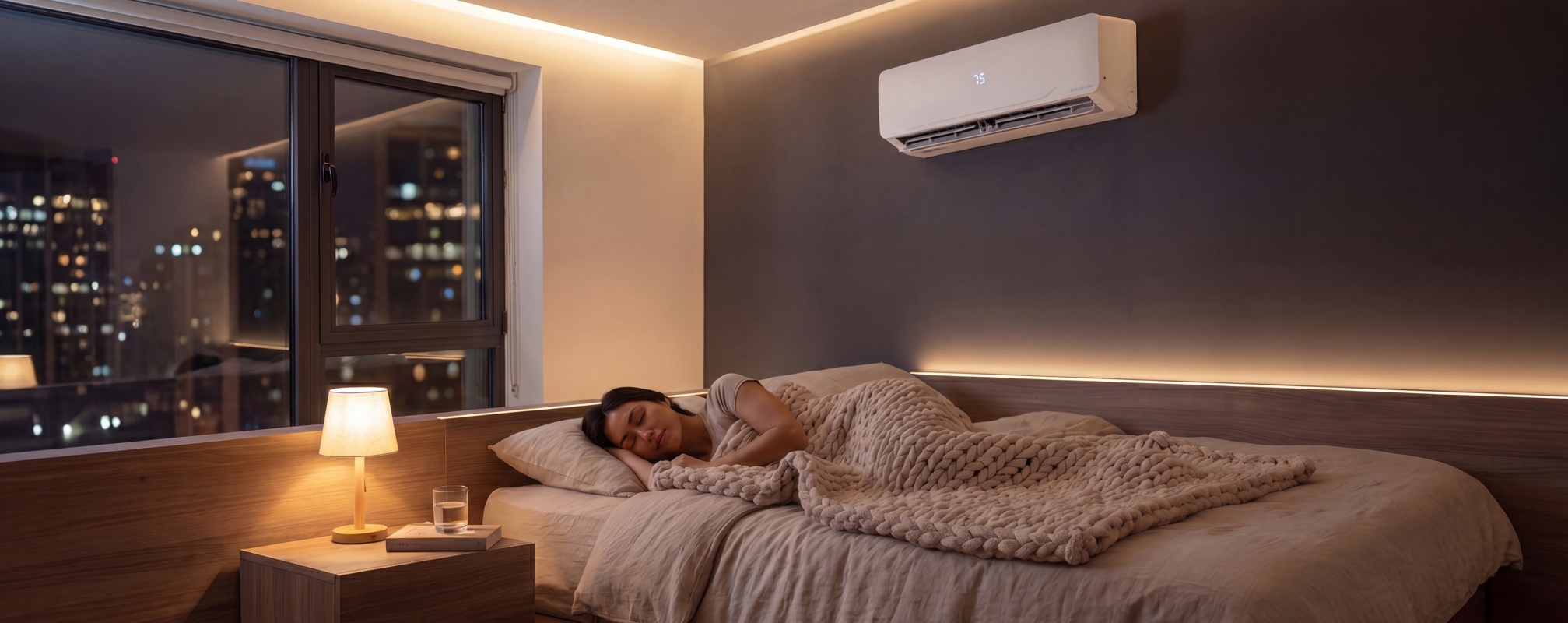
Cooling technology has changed a lot over the past few years. People used to focus almost entirely on one thing: whether an air conditioner could make a room cold quickly. Today, comfort expectations have shifted. Homeowners increasingly want a quiet and comfortable AC that can cool a room without loud compressor sounds, uneven airflow, or temperature fluctuations.
Many discussions across home improvement communities and HVAC forums reveal a common pattern: users often describe comfort as something they notice more at night than during the day. A room may reach the desired temperature, but if the unit cycles loudly, pushes harsh air directly onto the bed, or creates vibration noise through walls, sleep quality can still suffer. Recent homeowner discussions also show increasing preference for inverter systems and mini splits because of their lower operating noise and more consistent comfort experience.
Why a Low Noise Air Conditioner Matters More Than People Think
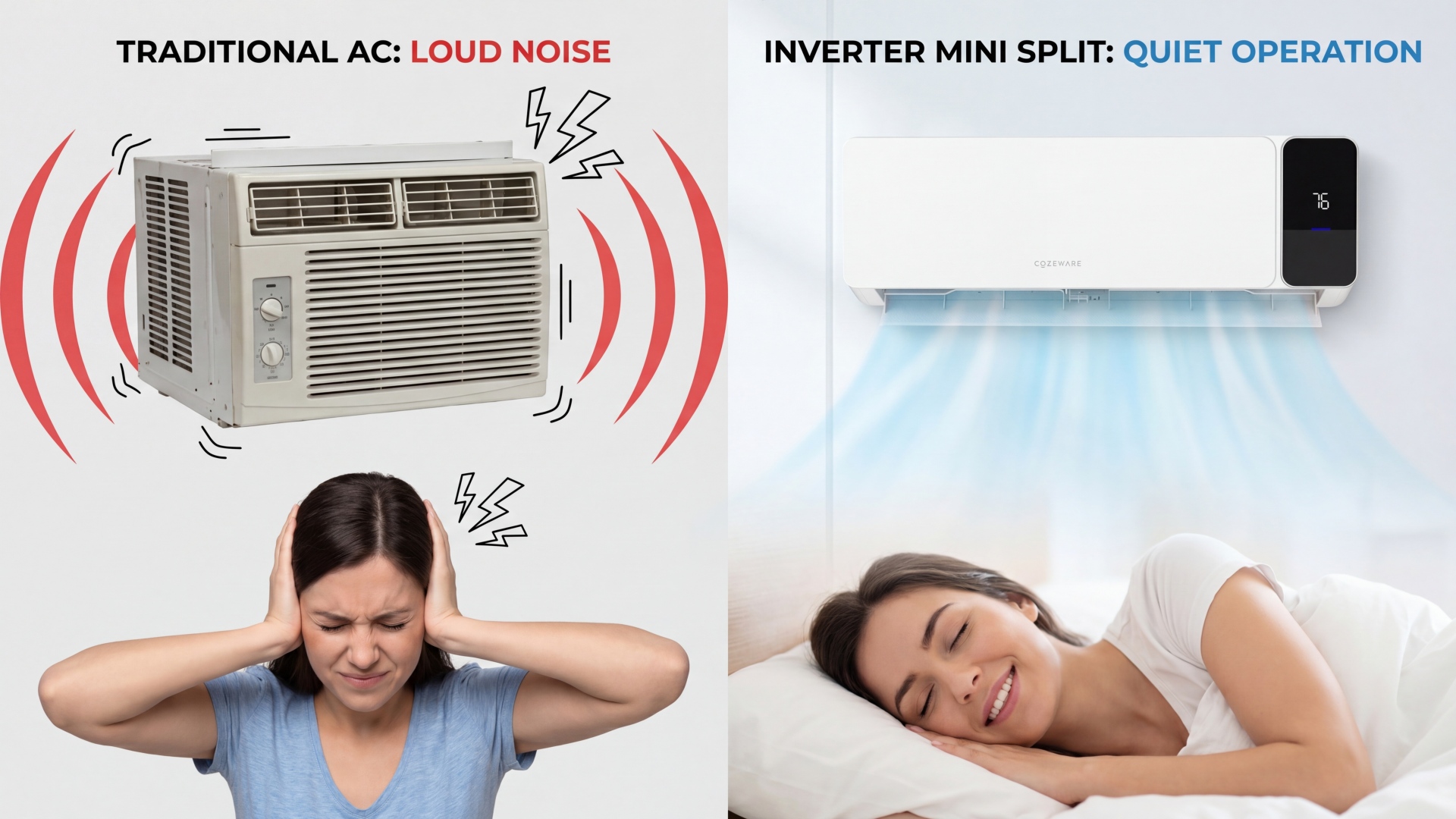
A low noise air conditioner does more than simply reduce annoyance. Sound directly affects concentration, rest, and overall indoor experience.
Traditional air conditioning systems often produce sudden compressor startup sounds and noticeable fan speed changes. Users frequently describe these interruptions as distracting, particularly in bedrooms, home offices, and small apartments.
Modern inverter systems work differently:
They adjust cooling output gradually
Fan speed changes smoothly
Compressor operation becomes more consistent
Sudden sound spikes become less common
Many homeowners who switched from portable units or older systems report that the difference feels immediate. Instead of hearing constant cycling sounds, they describe the room as calmer and less disruptive. Some even say they occasionally forget the unit is running at all.
How a Sleep-Friendly Mini Split Supports Better Rest
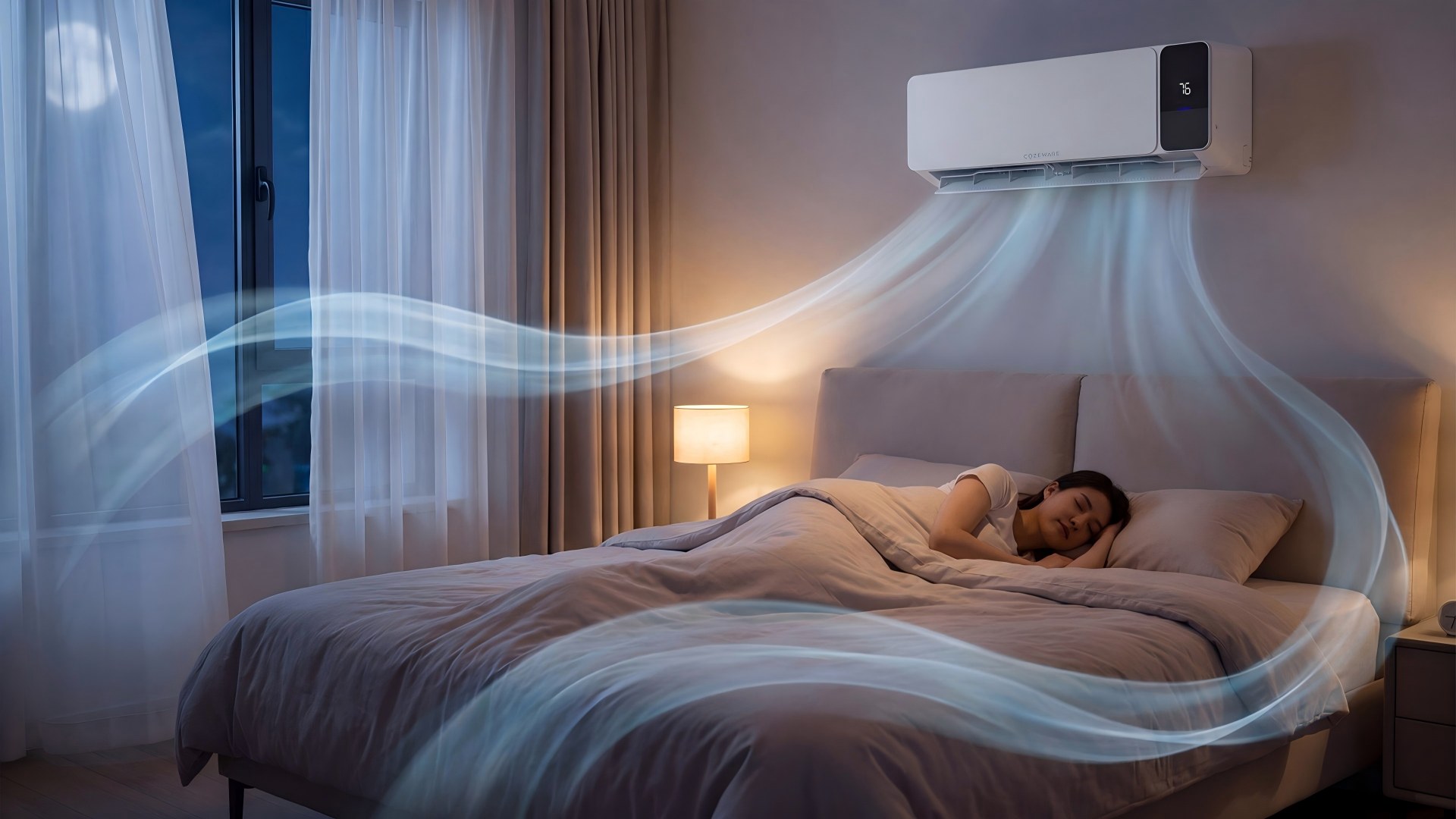
A sleep-friendly mini split has become one of the most discussed options for bedroom cooling.
People frequently mention sleep-related comfort when comparing mini splits with portable or window units. Several factors contribute to that experience:
Consistent Temperature Control
Older systems commonly cool aggressively and then shut off entirely before restarting again.
This pattern can create:
Temperature swings
Hot and cold spots
Discomfort during sleep
Mini split systems with inverter technology maintain a more stable room temperature instead of repeatedly stopping and starting.
Reduecd Nighttime Sound Disturbance
Sleep quality can be affected by sudden sound changes even when people do not fully wake up.
A sleep-optimized cooling setup often prioritizes:
Quiet fan modes
Stable operation
Lower vibration levels
Smooth airflow delivery
Why Vibration-Free AC Units Feel More Comfortable
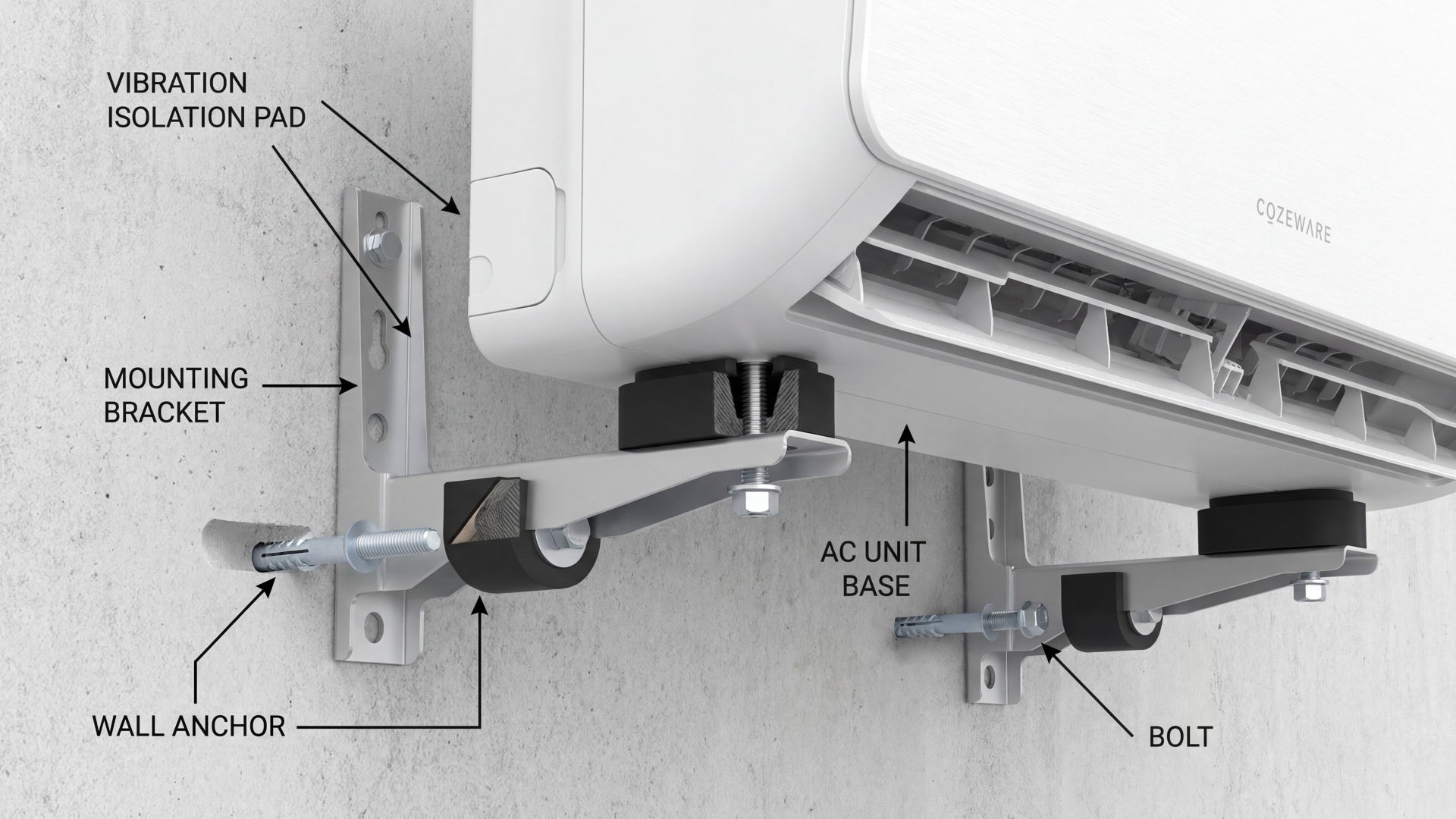
One overlooked comfort factor is mechanical vibration.
Many people assume air conditioner noise only comes from the fan or compressor, but vibration transfer can also create unwanted sounds throughout the room.
Vibration-free AC units are designed to minimize movement and reduce structural noise transmission.
Benefits may include:
Less wall vibration
Reduced humming sounds
Fewer rattling noises
Better long-term comfort
Homeowners often note that installation quality also matters. Improper mounting can make even a quiet unit feel noisy indoors. Discussions among mini split owners repeatedly mention that correct placement significantly improves comfort.
Best Airflow Design AC Features That Improve Comfort
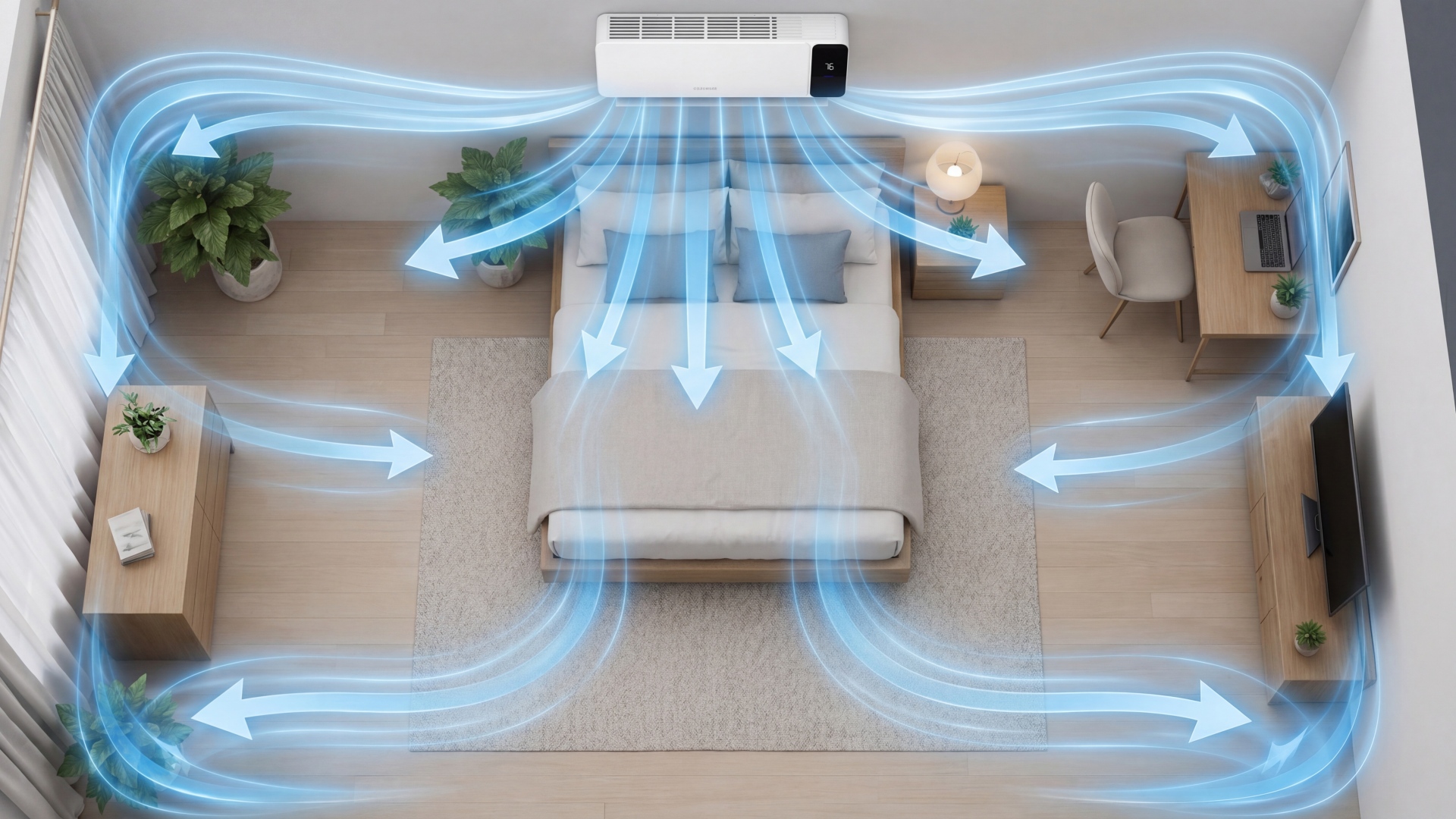
The best airflow design AC does not simply push large amounts of cold air.
People increasingly prefer airflow that feels natural and evenly distributed.
Key features include:
Multi-direction airflow
Wide-angle air distribution
Smart sensing technology
Adjustable fan patterns
Indirect airflow modes
Poor airflow design can create uncomfortable situations where one area becomes too cold while another remains warm.
Modern airflow systems attempt to avoid direct cold blasts and instead spread conditioned air throughout the room more evenly. This often creates a softer cooling experience that users describe as feeling more natural.
Indoor Comfort AC Tips for Everyday Use
Simple habits can improve comfort regardless of the air conditioner being used.
Indoor Comfort AC Tips
Keep airflow paths clear around indoor units
Clean filters regularly
Avoid placing furniture directly under vents
Use sleep mode during nighttime operation
Set a stable temperature instead of making large adjustments
Check installation quality if vibration becomes noticeable
Comfort is often influenced by several small factors working together rather than one single feature.
Creating a More Comfortable Home Environment
Finding a quiet and comfortable AC today involves more than simply choosing a system with strong cooling performance. Features like lower operating noise, balanced airflow, reduced vibration, and sleep-friendly settings all contribute to a better everyday experience.
As comfort expectations continue to evolve, homeowners increasingly look for cooling solutions that support sleep, productivity, and relaxation. A well-designed air conditioning system is no longer only about making a room colder, it is about creating an indoor environment that feels comfortable throughout the day and night.