
Ductless air conditioners, also known as mini split systems, are becoming a popular choice for modern homes. This guide on Ductless Air Conditioner Pros and Cons provides a practical ductless AC review, covering performance, energy efficiency, and installation flexibility.
You'll also learn how these systems compare to traditional AC units and whether they suit your space. From cost considerations to long-term benefits, this overview helps you decide if a ductless AC system is the right cooling solution for your needs.
Simple Guide: Ductless Air Conditioner Pros and Cons Tips
A ductless AC system connects an indoor unit to an outdoor compressor without using ducts, making it a more flexible and efficient cooling solution for many homes. This setup allows for easier installation, especially in spaces where traditional ductwork is not practical, such as apartments, older houses, or room additions.
It also enables better temperature control in individual rooms through zoning, helping improve comfort while reducing energy waste. When exploring Ductless Air Conditioner Pros and Cons, this type of system stands out for its convenience, energy efficiency, and ability to deliver targeted cooling exactly where it's needed.
Guide to Mini Split Advantages
There are several mini split advantages that make these systems appealing for everyday use. One of the biggest mini split benefits is energy efficiency, since there's no energy loss through ductwork like in traditional systems. This helps reduce electricity usage while keeping your space consistently cool.
They also offer flexible installation, making them suitable for apartments, older homes, and renovated spaces where adding ducts can be complicated.

Another key benefit is zoning. You can control temperatures in different rooms separately, helping save energy and improve comfort based on individual needs. Ductless AC units are also known for their quiet operation, making them ideal for bedrooms, home offices, or any space where a calm environment is important.
Guide to Mini Split Disadvantages
Despite the benefits, there are also mini split disadvantages to consider before making a decision. While these systems offer efficiency and flexibility, they may not be the perfect fit for every home or budget.
Higher upfront cost:
Installation and unit prices are typically more expensive than traditional AC systems or window units.Visible indoor unit:
The wall-mounted design may not match everyone’s interior aesthetic.Regular maintenance:
Filters need frequent cleaning to maintain performance and air quality.Multiple units needed:
Larger homes may require several indoor units, increasing overall costs.Professional installation:
Proper setup often requires skilled technicians, adding to the initial expense.
Considering these factors can help you better evaluate whether a mini split system aligns with your needs and budget.
Is Ductless AC Worth It for Your Home and Budget?
So, is ductless AC worth it? The answer depends on your needs, budget, and home setup. Ductless systems are a great option if you want energy efficiency, flexible installation, and better control over room temperatures.
Features like zoning allow you to cool only the spaces you use, which can help reduce electricity costs over time. They’re also ideal for homes without existing ductwork, renovations, or additions where installing ducts would be complicated.
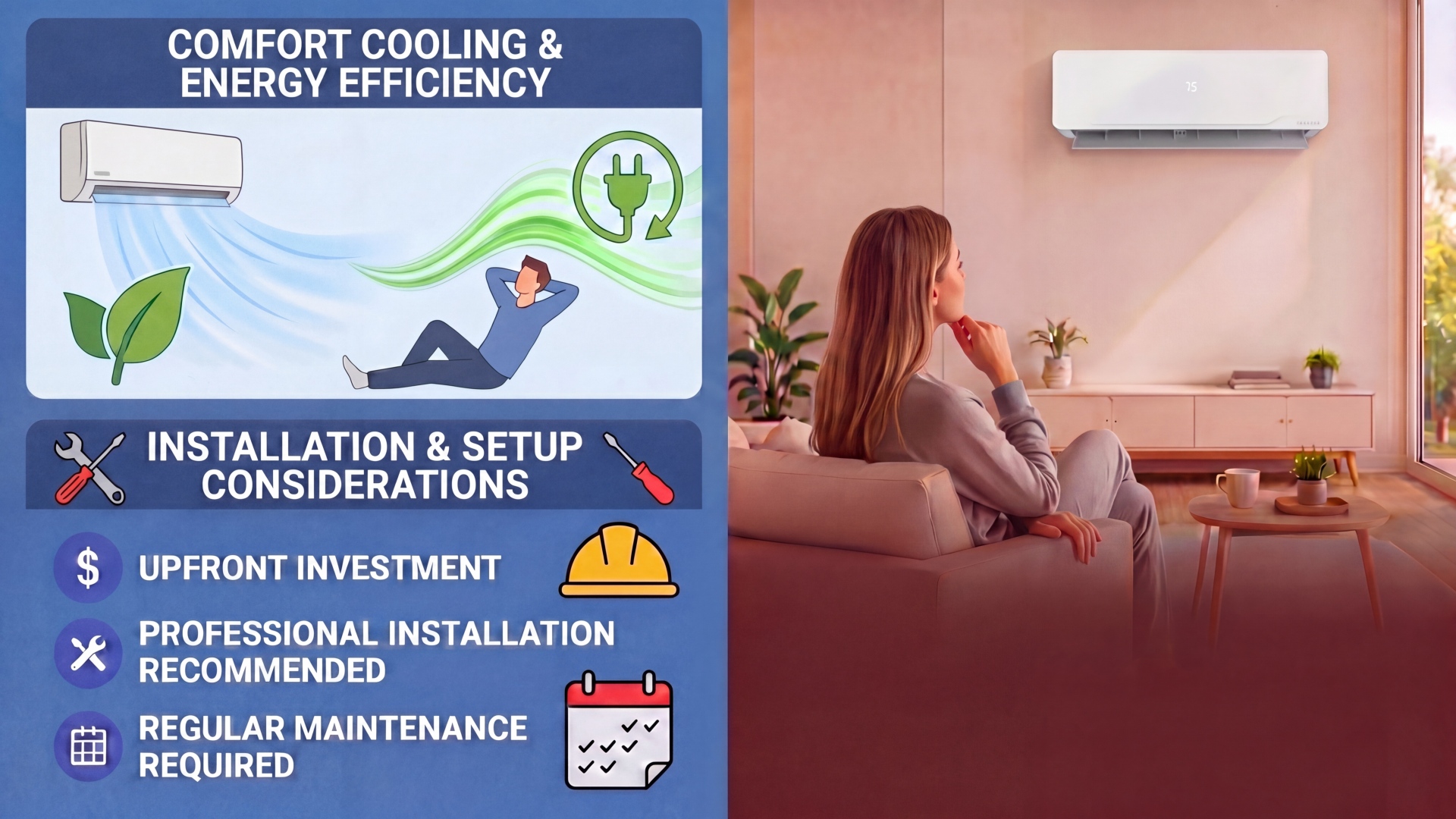
On the other hand, the upfront cost can be higher compared to traditional AC units, especially if multiple indoor units are required. Maintenance, such as regular filter cleaning, is also necessary to keep the system running efficiently.
In the long run, many homeowners find that the comfort, efficiency, and convenience make ductless AC a worthwhile investment.
Smart Guide to Mini Split Benefits
Mini split systems, also known as ductless AC, offer several practical advantages for modern homes. One of the main mini split benefits is energy efficiency, since there's no ductwork that can cause energy loss. This allows the system to cool rooms more effectively while helping reduce electricity usage.

Another advantage of ductless AC is its flexibility. These systems are easy to install and work well in apartments, older homes, or new additions where installing ducts can be difficult. They also support zoning, so you can control temperatures in different rooms based on your needs.
In addition, ductless AC units operate quietly, making them ideal for bedrooms, workspaces, or any area where comfort and low noise are important.
Complete Guide to Ductless AC Review

A ductless AC, also known as a mini split system, is a popular cooling solution for homes that need flexibility and efficiency. In this ductless AC review, we'll look at how it performs in terms of cooling, energy use, and overall convenience.
One of the biggest advantages of a ductless AC is its ability to cool specific areas without relying on ductwork. This results in more efficient energy use and better temperature control in each room. Many users also appreciate its quiet operation, making it suitable for bedrooms, home offices, or small apartments.
Installation is generally easier compared to traditional systems, especially for homes without existing ducts. However, the upfront cost can be higher, particularly if multiple indoor units are needed for larger spaces. Regular maintenance, such as cleaning filters, is also important to keep the system running efficiently.
Overall, this ductless AC review shows that it's a strong option for those looking for energy-efficient, customizable cooling. While the initial investment may be higher, the long-term comfort and savings can make it worthwhile.