Heating and Cooling Solutions for Tiny Homes: Finding Comfort in Small Spaces
Over the past decade, tiny homes have become increasingly popular as more people look for simpler, more sustainable ways of living. What was once considered a niche lifestyle has evolved into a practical housing option embraced by a wide range of homeowners. Tiny homes attract people for many reasons, including affordability, flexibility, and a smaller environmental footprint. While some individuals choose tiny homes as their full-time residence, others use them as vacation rentals, guest houses, backyard offices, or creative studio spaces.
Despite their growing popularity and improved design options, tiny homes remain exactly what their name suggests, small. Most tiny homes are under 500 square feet, which presents unique challenges when it comes to heating and cooling. Maintaining a comfortable indoor temperature throughout the year can be difficult without the right climate control solution. Because of their limited space and unique structural designs, tiny homes require heating and cooling systems that are efficient, compact, and adaptable.
The Unique Climate Control Challenges of Tiny Homes
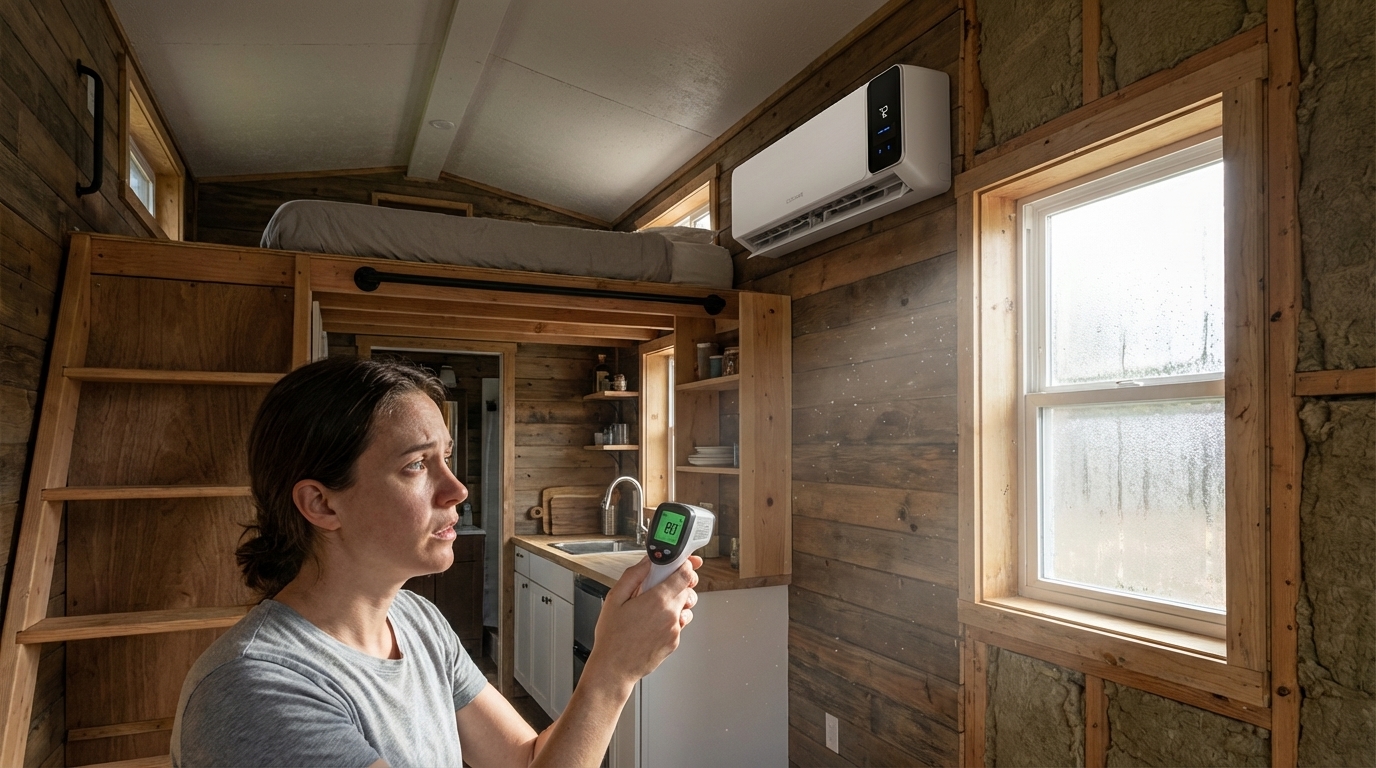
Tiny homes can be found in many different climates around the world, from cold northern regions to hot and humid areas. However, the compact structure of a tiny home creates certain limitations that traditional houses do not face. Many tiny homes have minimal wall space, limited insulation, and little room for large mechanical systems such as traditional HVAC units or ductwork.
Because of these constraints, selecting the right heating and cooling system becomes especially important. Factors such as the home's location, climate conditions, available power sources, and the homeowner's budget all play a role in determining the most suitable option.
Additionally, the design of the tiny home itself must be considered. Some tiny homes are built on foundations and remain stationary, while others are built on trailers and designed for mobility. Mobile tiny homes often face additional challenges such as insulation gaps or minor structural shifts during transport, which can affect temperature regulation.
While several heating and cooling options exist for small living spaces, each comes with its own advantages and limitations. Some solutions may be affordable upfront but inefficient over time, while others provide better performance but require a larger initial investment.
Common Heating and Cooling Options for Tiny Homes
There are several methods homeowners can use to regulate temperature in a tiny house. The best option often depends on the size of the home, the climate, and the owner's long-term goals.
Ductless Mini Split Systems
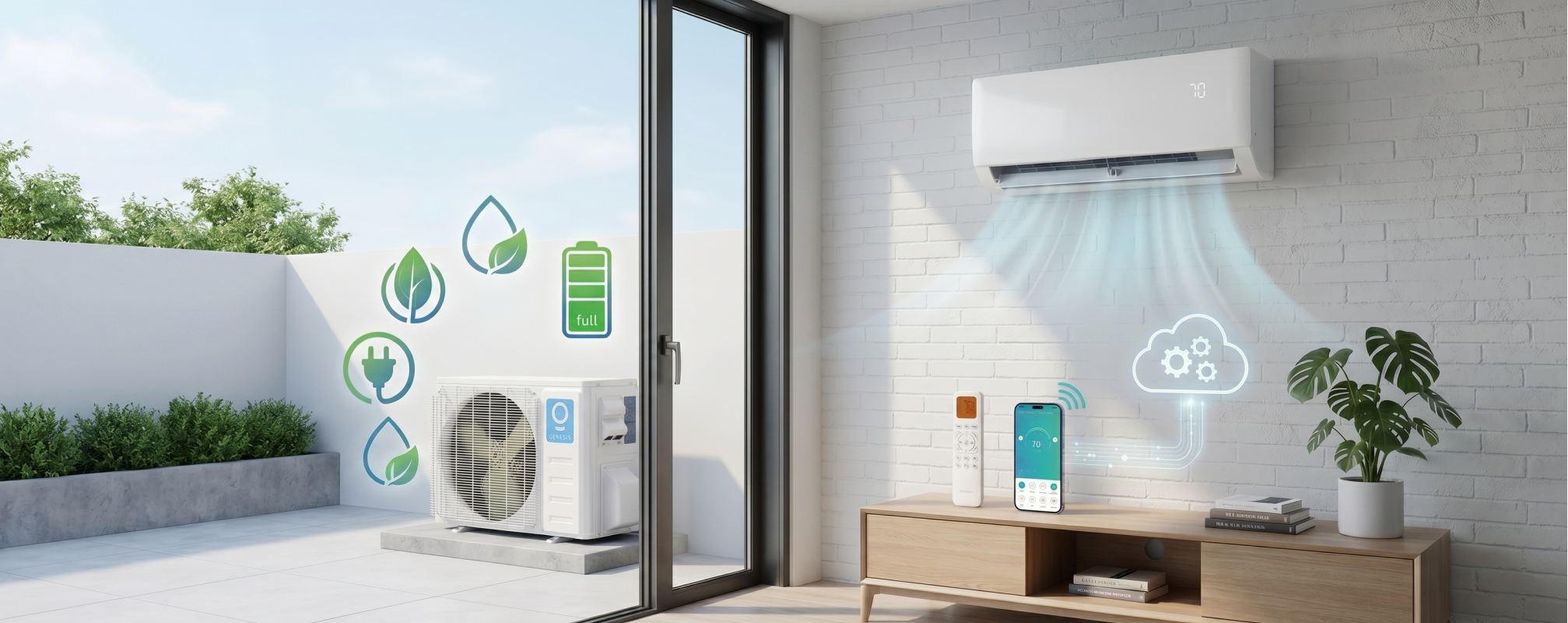
One of the most efficient and practical solutions for stationary tiny homes is a ductless mini split system. Unlike traditional HVAC systems, mini splits do not require ductwork, which makes them ideal for compact spaces where installation flexibility is essential.
A mini split system typically includes an outdoor compressor unit connected to one or more indoor air handlers. These units are linked by refrigerant lines and electrical wiring, allowing them to efficiently transfer heat or cool air into the living space.
Most modern mini split systems are designed to provide both heating and cooling, making them a versatile year-round solution. They are also highly energy efficient compared to many traditional systems.
Another advantage of mini splits is their zoning capability. Homeowners can install multiple indoor units to control temperatures in different parts of the home. This is especially helpful in tiny homes with loft spaces, where heat tends to rise and create uneven temperatures between levels.
Indoor units can be mounted on walls, ceilings, or even near the floor, allowing homeowners to maximize their limited interior space.
Portable Heating Options
Portable heaters are a common choice for tiny homeowners who want a simple and affordable heating solution. These small devices can effectively warm specific areas within the home and are easy to move when needed.
However, portable heaters are generally best suited for supplemental heating rather than serving as the primary heat source. Using them as the sole heating solution may result in uneven temperatures throughout the home.
Gas or electric fireplaces can also provide additional warmth while adding a cozy aesthetic element to the space. Although fireplaces may not heat the entire home efficiently, they can be helpful during colder months.
For homeowners concerned about power outages, wood-burning or pellet stoves can serve as a reliable backup heating method. These traditional heating systems can operate independently of electricity and provide steady warmth when needed.
Window Air Conditioners
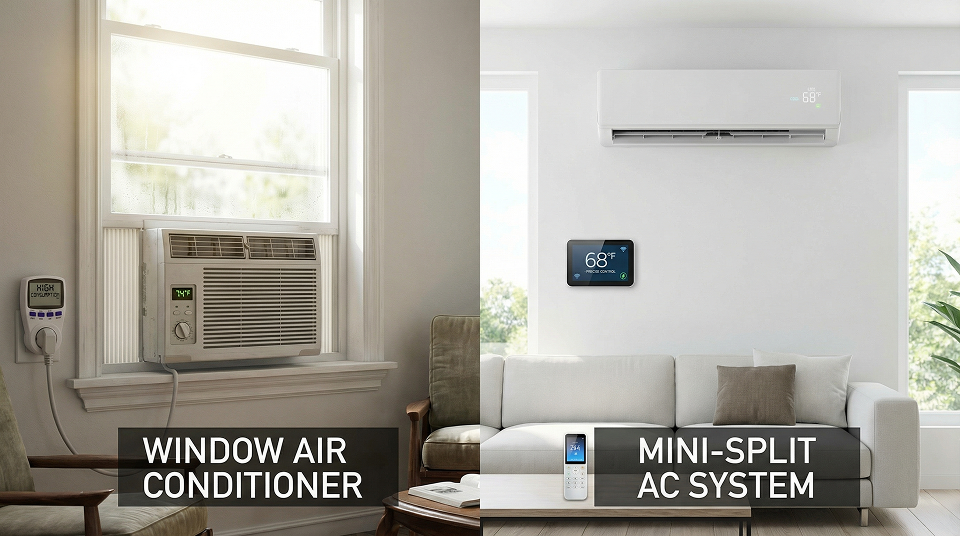
For cooling, window-mounted air conditioners remain a popular and cost-effective solution. These compact units are widely available and relatively easy to install.
In very small tiny homes, a single window AC unit may be enough to maintain comfortable indoor temperatures. However, larger tiny homes or those with multiple rooms may require additional units to distribute cool air effectively.
While window units can provide sufficient cooling, they may not offer the same energy efficiency or temperature control as more advanced systems like mini splits.
Fans and Natural Ventilation
In regions with moderate climates, simple airflow solutions may be enough to maintain comfort during warmer months. Ceiling fans and oscillating fans help circulate air throughout the space, preventing stagnant heat and improving overall comfort.
Strategically placed fans can also reduce humidity levels and create a cooling effect by keeping air moving within the home.
Improving Energy Efficiency in Tiny Homes
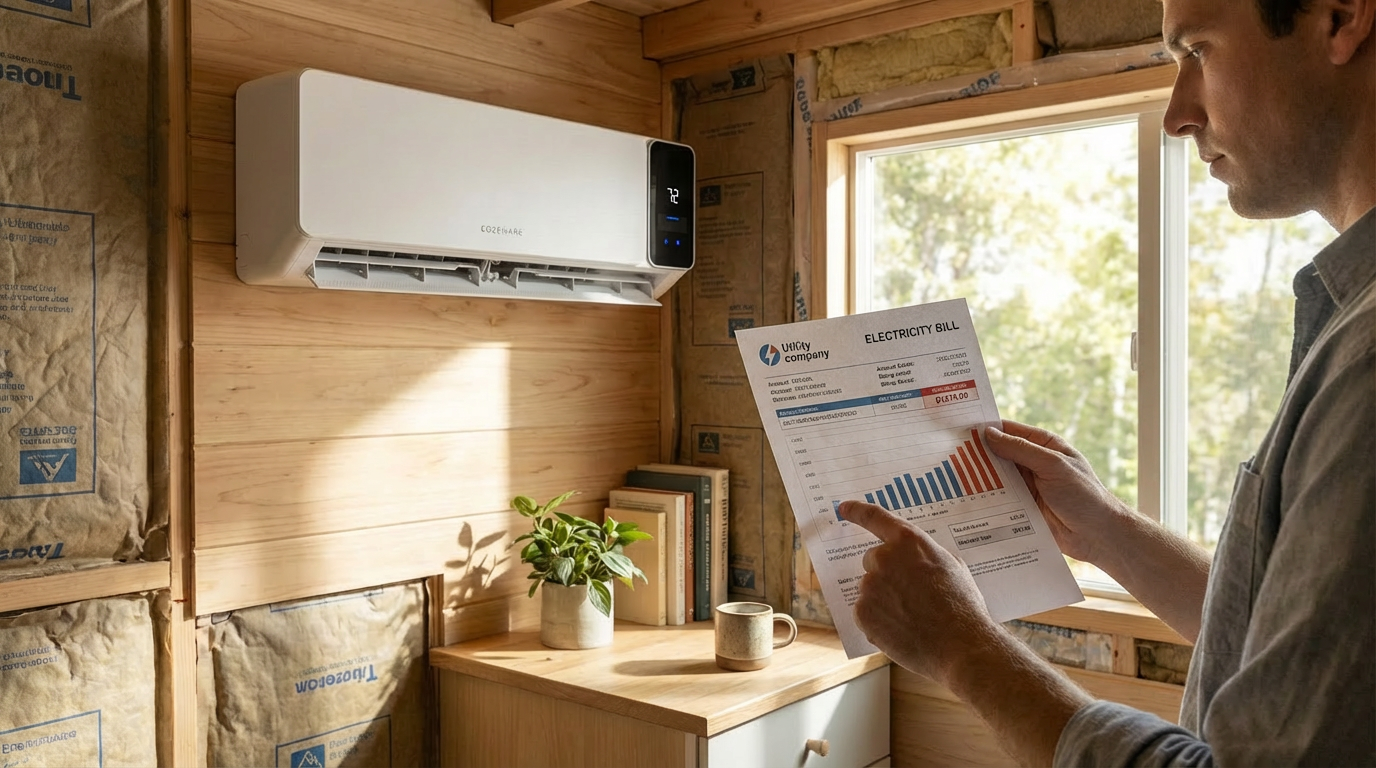
Because tiny homes are designed to be compact and mobile, insulation and structural sealing often become critical factors in maintaining indoor temperature. Poor insulation can allow heated or cooled air to escape quickly, forcing heating or cooling systems to work harder than necessary.
Improving insulation during the construction phase can significantly increase the home's energy efficiency. High-quality insulation helps stabilize indoor temperatures and reduces energy consumption.
In addition to insulation, homeowners should regularly inspect windows, doors, and other structural seals for air leaks. Even small gaps around window frames or door edges can allow conditioned air to escape.
Direct sunlight can also raise indoor temperatures, particularly in tiny homes with large windows or glass panels. Installing blinds, curtains, or window coverings can help reduce heat gain during warmer seasons.
For off-grid tiny homes, renewable energy sources such as solar panels can help power heating and cooling systems. Solar energy allows homeowners to reduce both electricity costs and environmental impact.
Homes built on trailers or elevated foundations may also benefit from adding skirting around the base. This prevents cold air from circulating underneath the structure and helps maintain warmer floors during winter months.
Upgrading windows can also improve energy efficiency. Double-pane or triple-pane thermal windows provide better insulation than single-pane glass by trapping insulating gas between the layers.
Maintaining Comfortable Temperatures in a Tiny Home
Temperature regulation in tiny homes can sometimes be challenging due to limited airflow between spaces. Loft areas, enclosed rooms, or spaces separated by walls may experience different temperatures from the main living area.
Installing a smart thermostat can help homeowners manage their heating and cooling systems more efficiently. These devices allow users to schedule temperature changes throughout the day, maintaining comfort while minimizing energy use.
Proper ventilation is equally important. Even in small spaces, fresh airflow helps prevent hot or cold spots and improves overall air quality. Adding small fans or ventilation openings can help distribute conditioned air more evenly throughout the home.
Finding the Right Heating and Cooling Solution
Choosing the ideal heating and cooling system for a tiny home requires careful consideration of several factors, including climate, energy efficiency, installation space, and overall cost.
Because tiny homes amplify many of the same HVAC challenges found in traditional homes, selecting an efficient system is essential. Among the many options available, ductless mini split systems often provide one of the best combinations of efficiency, performance, and space-saving design.
Ultimately, the right solution depends on how the tiny home is used, whether it is mobile or stationary, and the specific needs of the homeowner. By carefully evaluating available options and improving energy efficiency wherever possible, tiny homeowners can create a comfortable living environment year-round—even in the smallest of spaces.