1. Why Understanding Your Mini Split Matters
Knowing how your mini split works isn’t just for HVAC technicians. It can help you properly maintain it, diagnose common issues, reduce utility bills, and extend the lifespan of your unit. In short—understanding your system makes you a smarter homeowner.
2. What Exactly Is a Mini Split System?
A mini split—or ductless air conditioner—is a heating and cooling system made of two main parts: an outdoor unit and one or more indoor units. Unlike central AC, it doesn’t require ductwork, which means less energy loss and more installation flexibility.
Because air doesn’t travel through long ducts, mini splits are typically much more energy-efficient than traditional systems.
3. Core Components of a Mini Split System
Mini splits are simple in design but powerful in performance. Here’s what each part does.
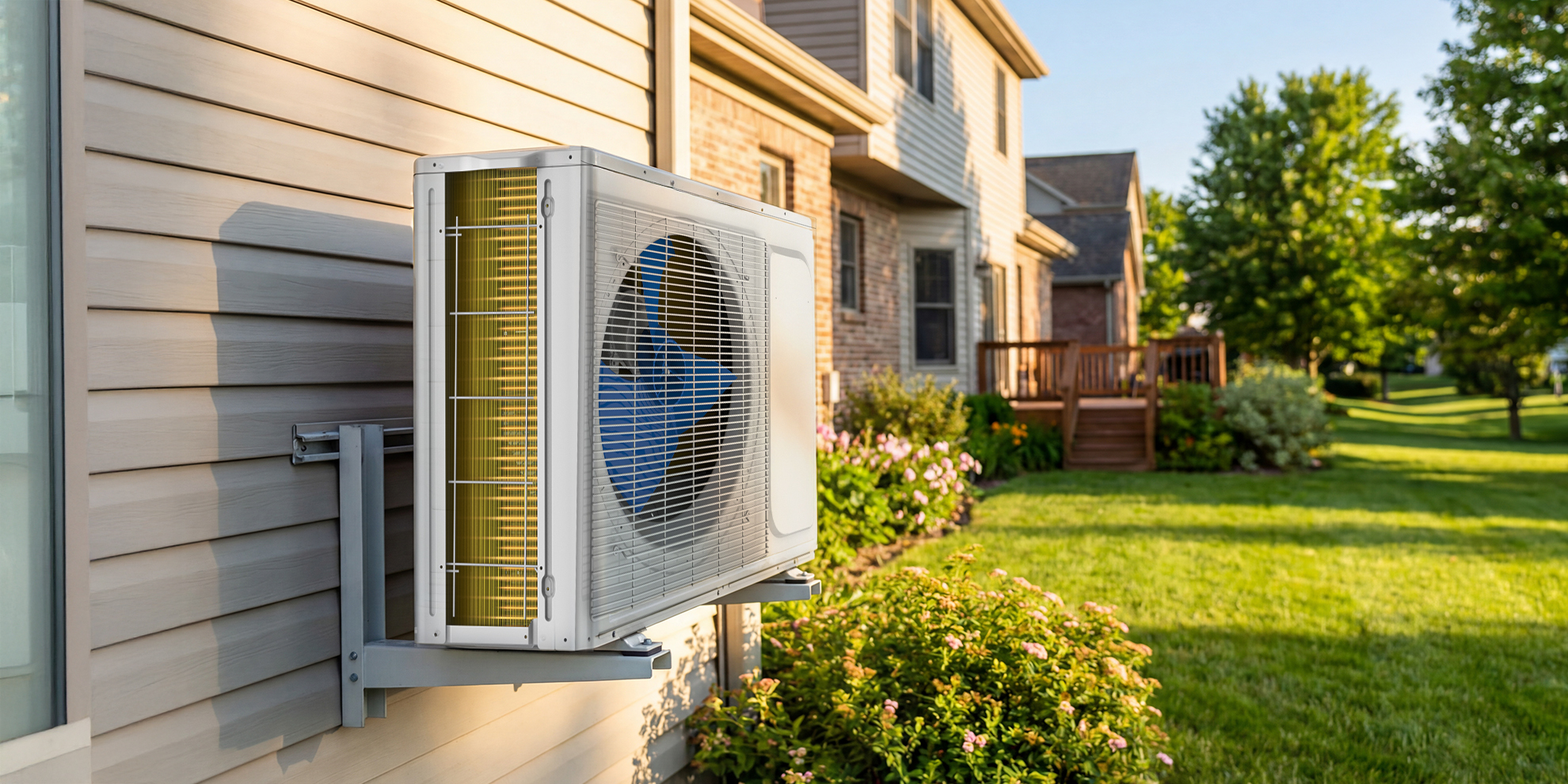
A. Outdoor Unit Components
Compressor
The heart of the system. It controls the pressure of the refrigerant and keeps it circulating.
Condenser Coil
Releases heat from your home to the outside air.
Outdoor Fan
Blows air across the condenser coil to help remove heat.
Expansion Valve
Regulates the flow of refrigerant and helps control temperature and pressure.
B. Indoor Unit Components
Evaporator Coil
Absorbs heat from the room during cooling mode.
Blower Fan
Distributes cool or warm air quietly and evenly.
Air Filter
Traps dust and ensures clean airflow throughout your home.
Temperature Sensors (Thermistors)
Monitor the room temperature and help the system adjust automatically.

4. How a Mini Split Works: Cooling & Heating Explained
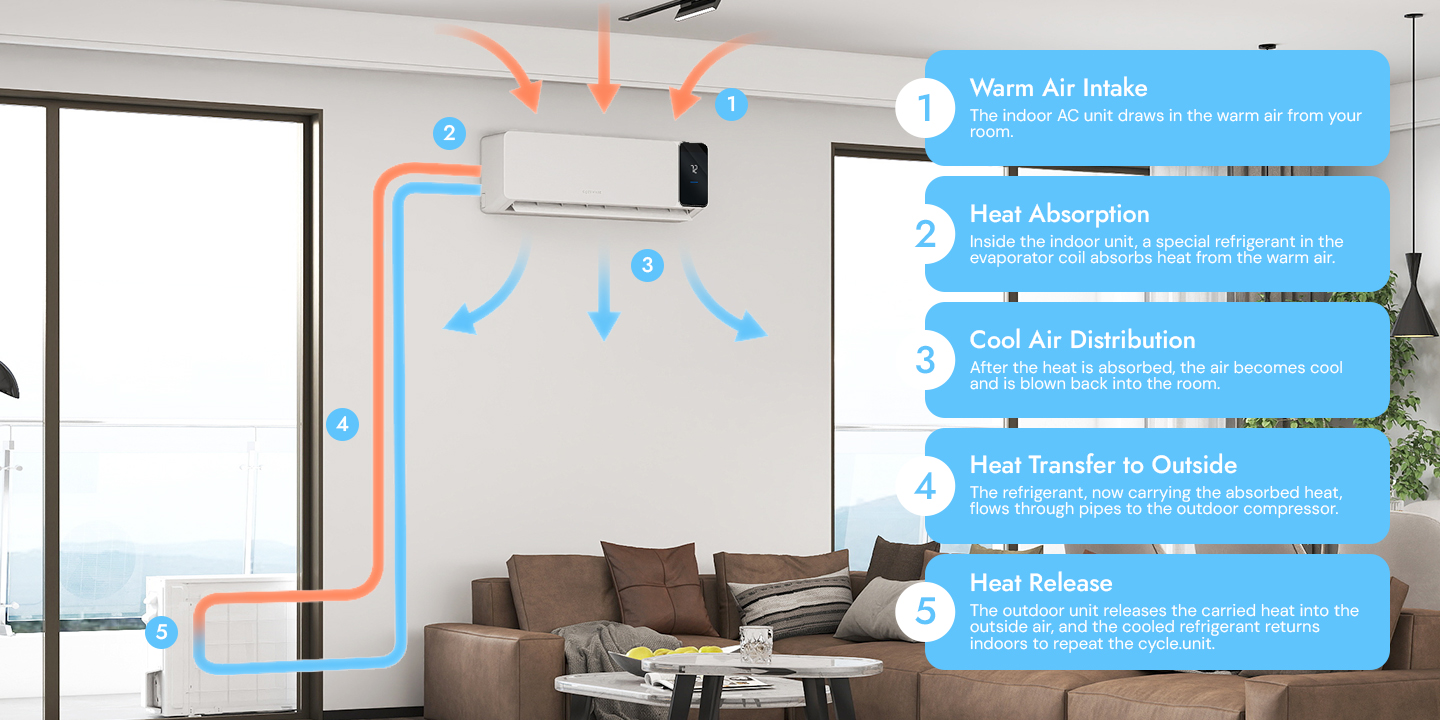
A. Cooling Mode
The indoor coil absorbs heat from the air in your room.
Refrigerant carries this heat to the outdoor unit.
The outdoor coil releases the heat into the outside air.
Cool air is blown back into the room.
Your home gets cooler—not because cold air is created, but because heat is removed.
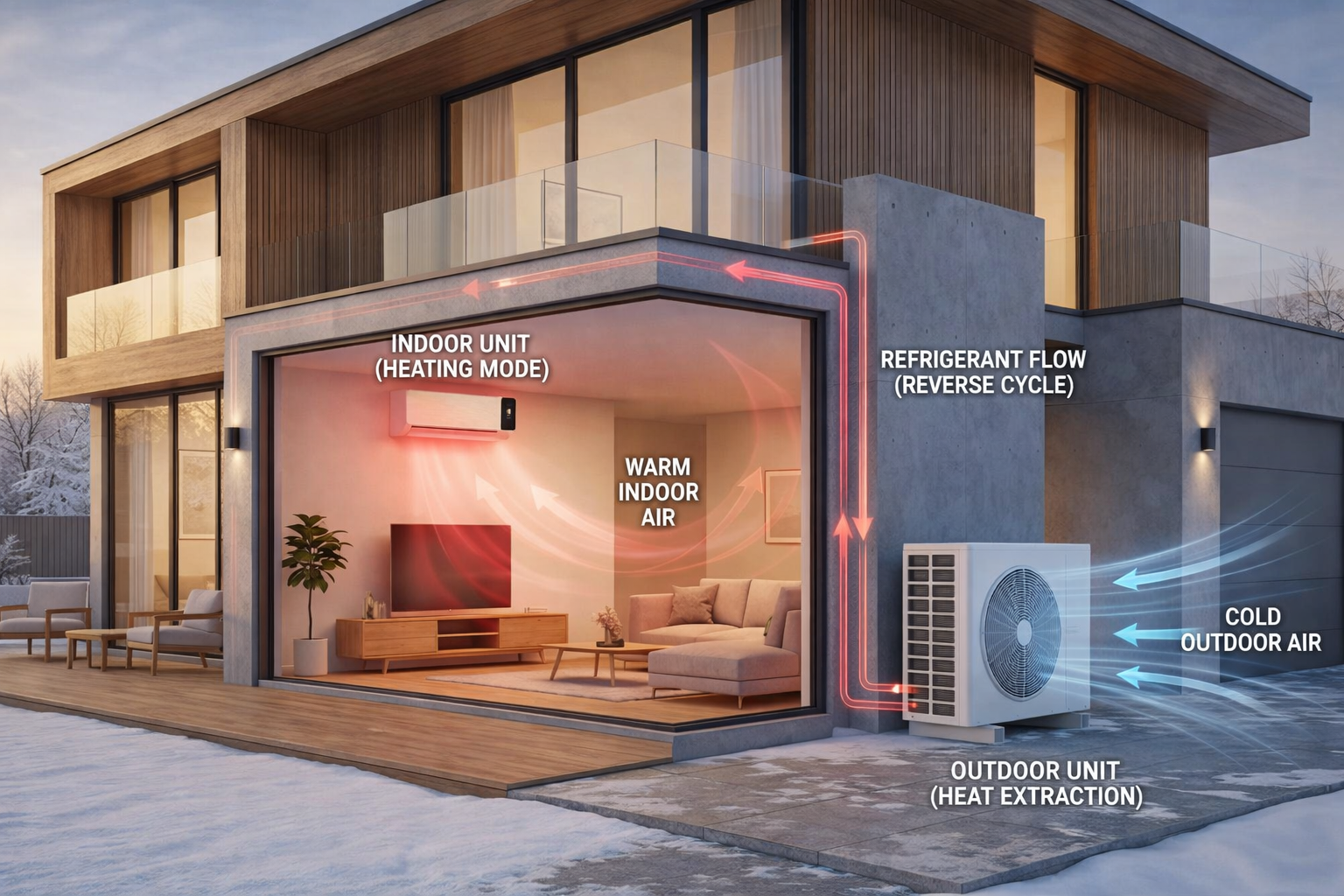
B. Heating Mode (Heat Pump Technology)
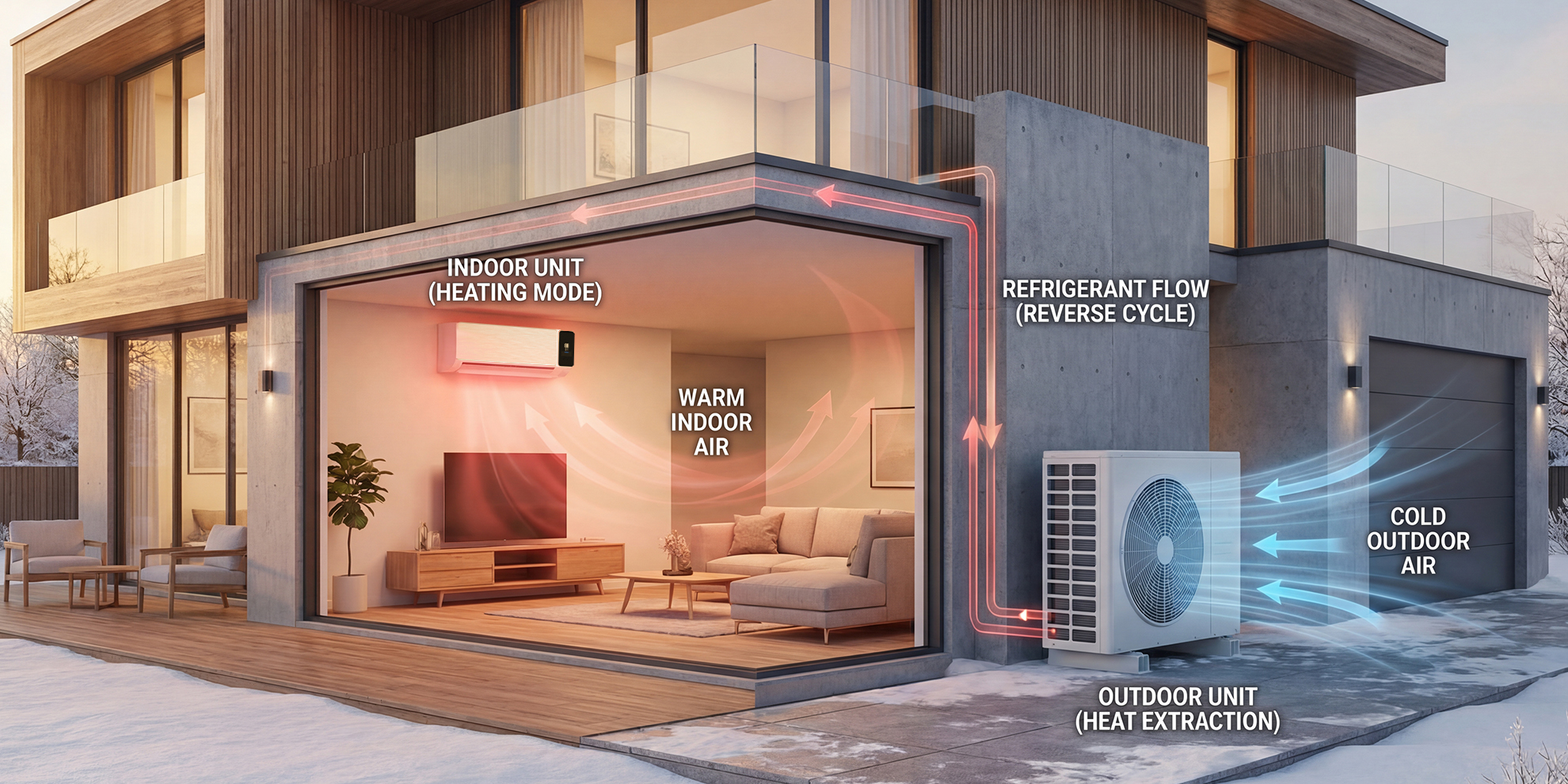
Mini splits use a heat pump, which runs in reverse during winter:
The system extracts heat from outdoor air—even in cold weather.
That heat is transferred inside through the refrigerant cycle.
Warm air is released into your home.
This makes mini splits extremely efficient for both heating and cooling.
5. What U.S. Homeowners Care About Most
A. Energy Efficiency
Each component—from compressor technology to coil materials—affects your SEER rating and annual energy costs. Mini splits often outperform central AC because they avoid duct losses.
B. Installation Cost Factors
Costs vary depending on:
How many indoor units you need
Distance between indoor and outdoor units
Electrical setup
Wall/ceiling structure
Understanding the system helps you make smarter installation choices.
C. Noise Levels
Mini splits are famously quiet.
Most noise comes from:
Indoor blower fan
Outdoor compressor
Outdoor fan
Because the compressor is outside, indoor noise stays very low—great for bedrooms and offices.
6. Common Problems & How Understanding Components Helps
Weak cooling/heating → dirty filters, refrigerant leak, blocked coils
Strange noise → loose fan, debris inside outdoor unit
Higher energy bills → sensor issues, low refrigerant, compressor inefficiency
Indoor unit dripping water → clogged drain line
Knowing where these problems originate helps you communicate better with technicians—or fix simple issues yourself.
7. Simple Maintenance Tips for Long-term Performance
Clean or replace air filters monthly
Keep the outdoor unit free of debris, leaves, and dust
Inspect coils for dirt buildup
Schedule a professional tune-up once per year
A little maintenance goes a long way in keeping your mini split healthy.
8. Conclusion
A mini split system may look simple, but its components work together in a surprisingly sophisticated way to bring you year-round comfort. Understanding how each part works will not only help you troubleshoot problems but also maximize efficiency and extend the lifespan of your investment.
Mini splits aren’t just efficient—they’re smart. And now, so are you.