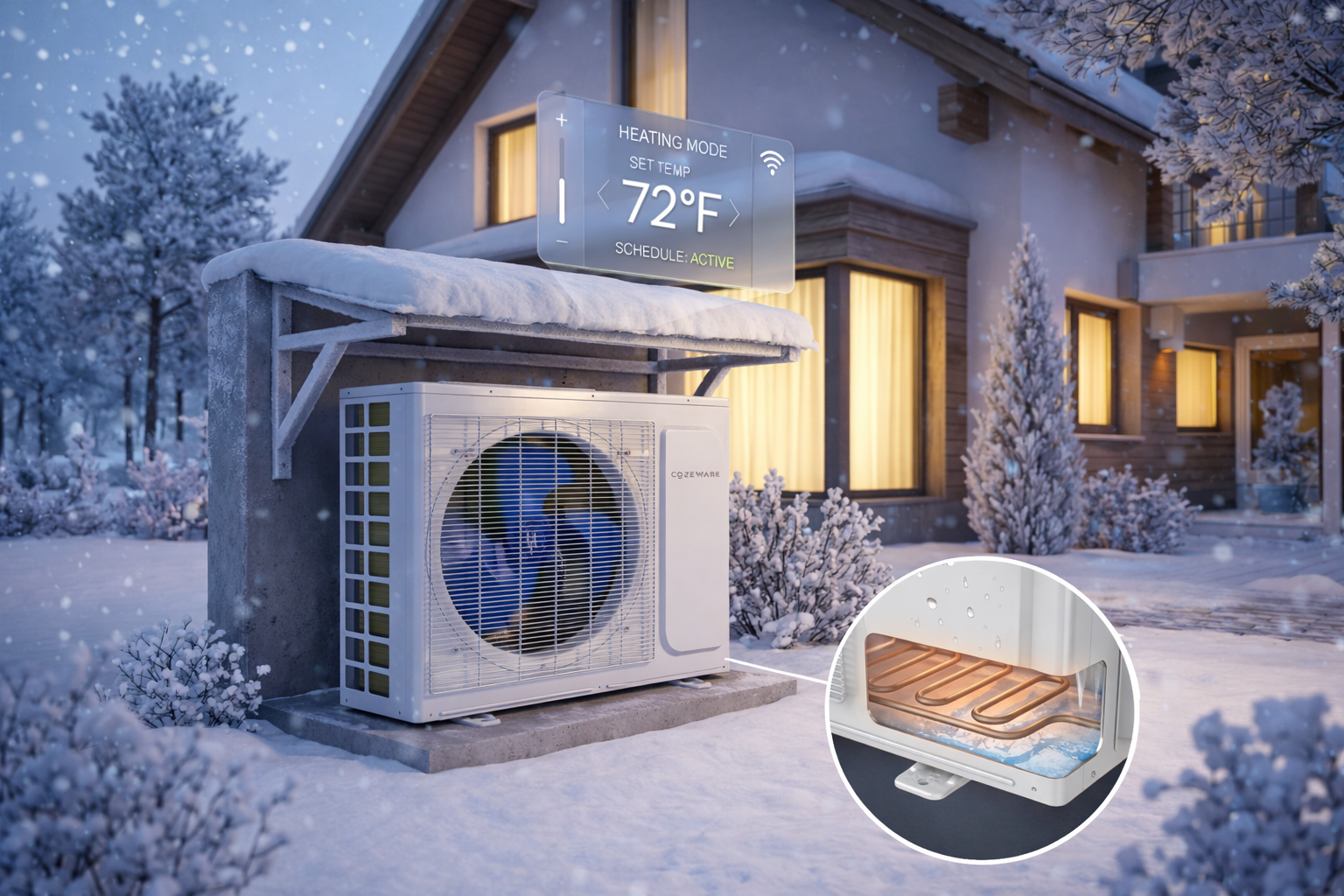
Introduction: Why Winter Performance Matters
Mini split heat pumps have become increasingly popular in the U.S., especially among homeowners looking for energy-efficient heating. But when winter temperatures drop—especially in northern states like Minnesota, Michigan, and New York—many people wonder whether their mini split can still deliver reliable heat.
The good news: modern cold-climate mini splits are designed to perform efficiently even in sub-zero temperatures. With the right setup and maintenance, your system can stay warm, comfortable, and efficient all winter long.
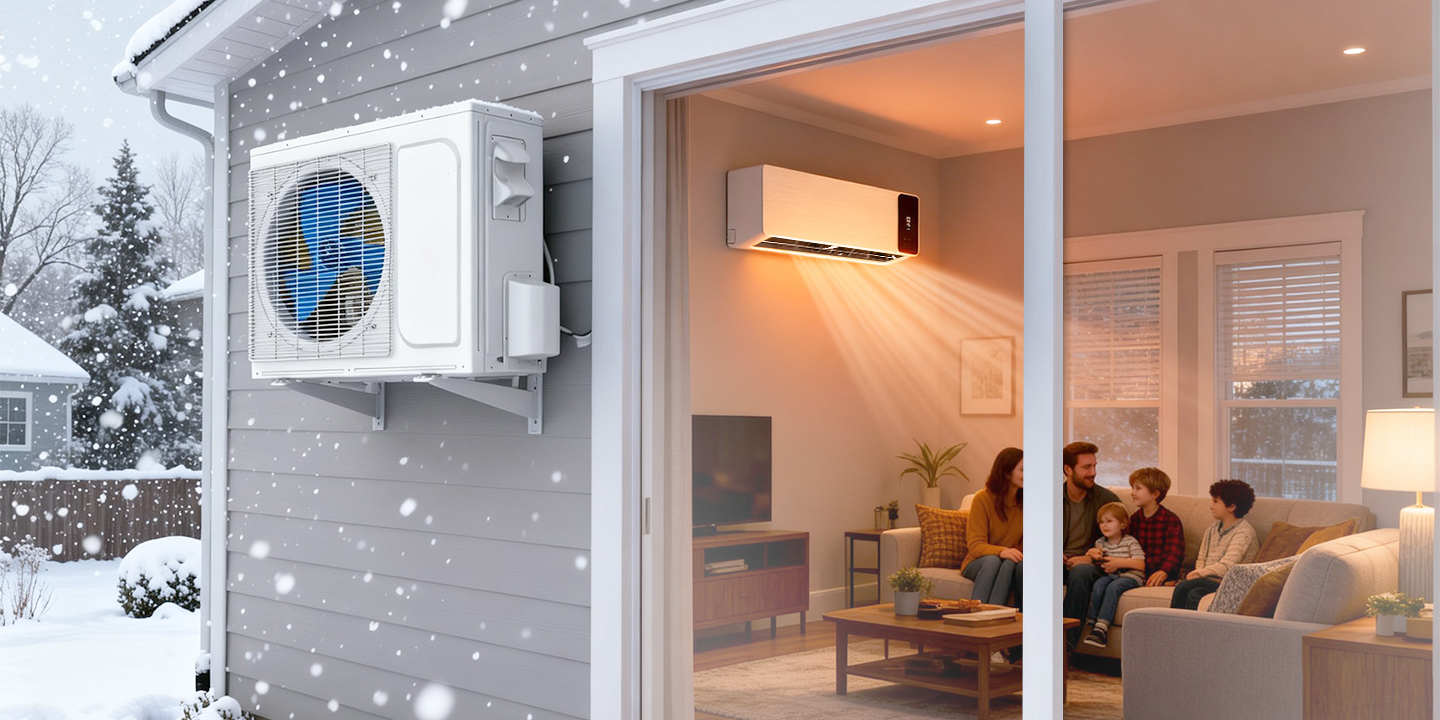
1. Common Low-Temperature Challenges for Mini Splits
Reduced Heating Capacity
Heat pumps work by extracting heat from outdoor air. The colder it gets, the harder the system has to work. This may result in slightly reduced heating performance.
Frequent Defrost Cycles
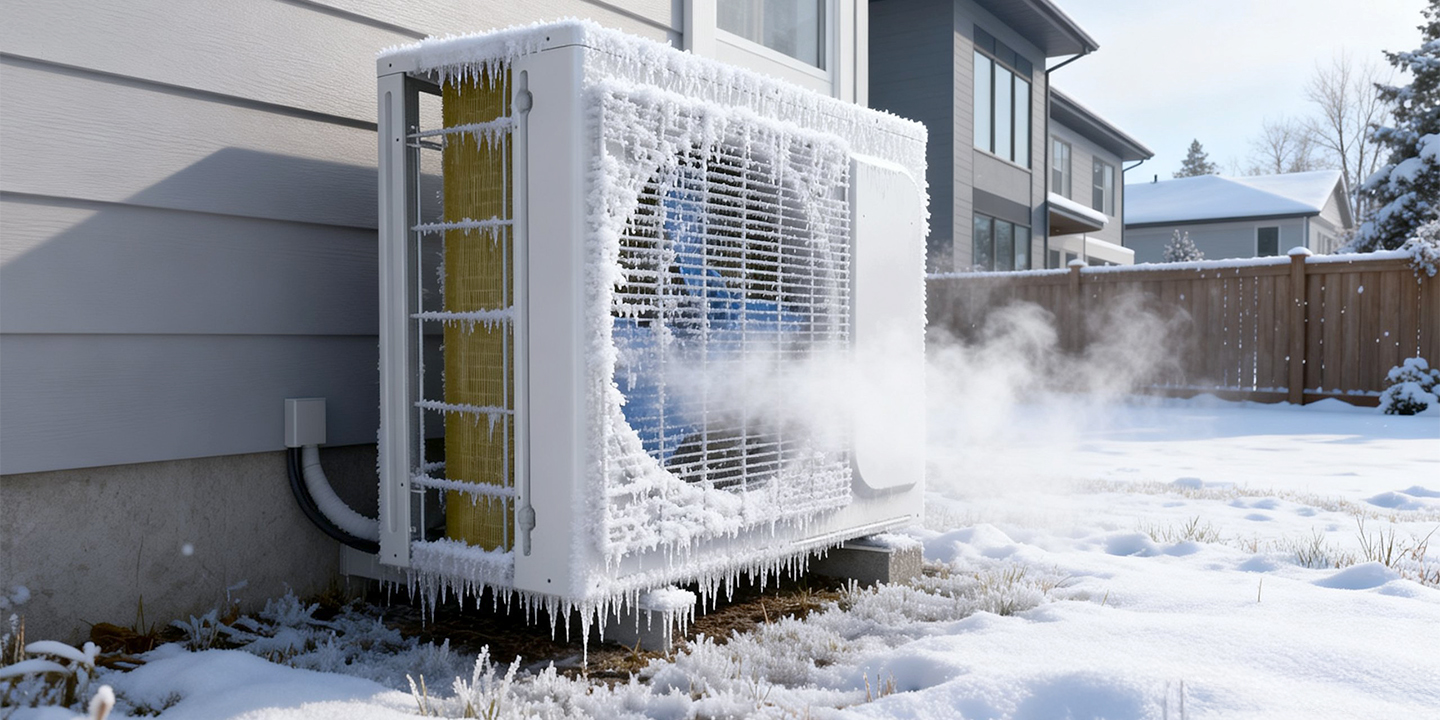
When frost forms on the outdoor unit, your mini split will enter “defrost mode.” You may notice steam coming from the outdoor unit or a short pause in indoor heating—this is completely normal.
Ice Buildup on the Outdoor Unit
A thin layer of frost is expected, but heavy ice buildup can block airflow and reduce performance.
Higher Energy Consumption in Extreme Cold
During severe cold waves, your heat pump may run longer to maintain your desired temperature.
“Is My Heat Pump Broken?”
Many users mistakenly think something is wrong during defrost cycles or when outdoor steam appears. Understanding these behaviors helps eliminate confusion.
2. How to Keep Your Mini Split Running Smoothly in Winter
(1) Use the Correct Mode and Settings
Always keep your system in HEAT mode—avoid AUTO, which may cause unnecessary switching.
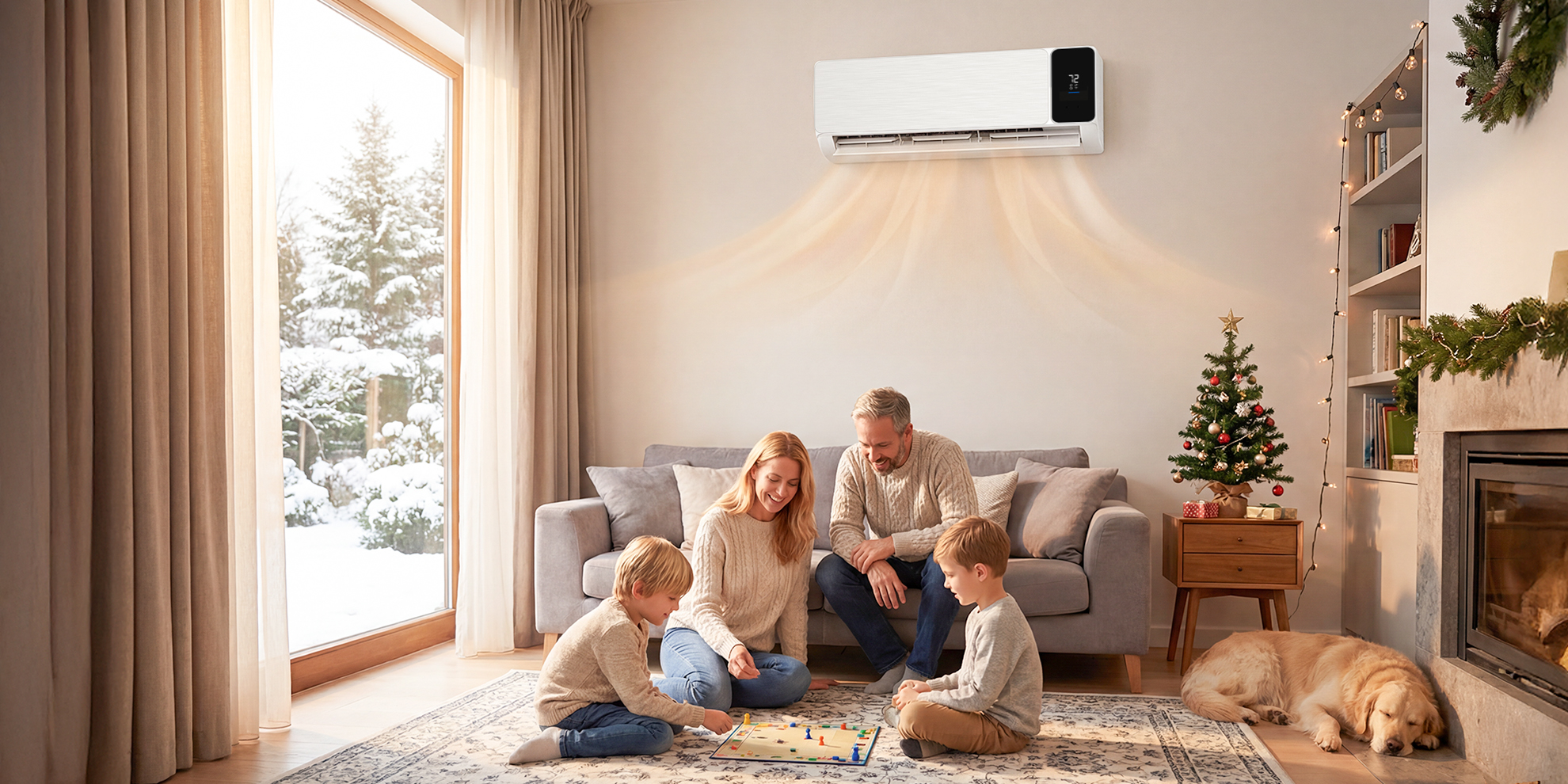
Maintain a steady indoor temperature (68–72°F).
Avoid frequent thermostat changes, which can increase energy use.
(2) Keep the Outdoor Unit Clear
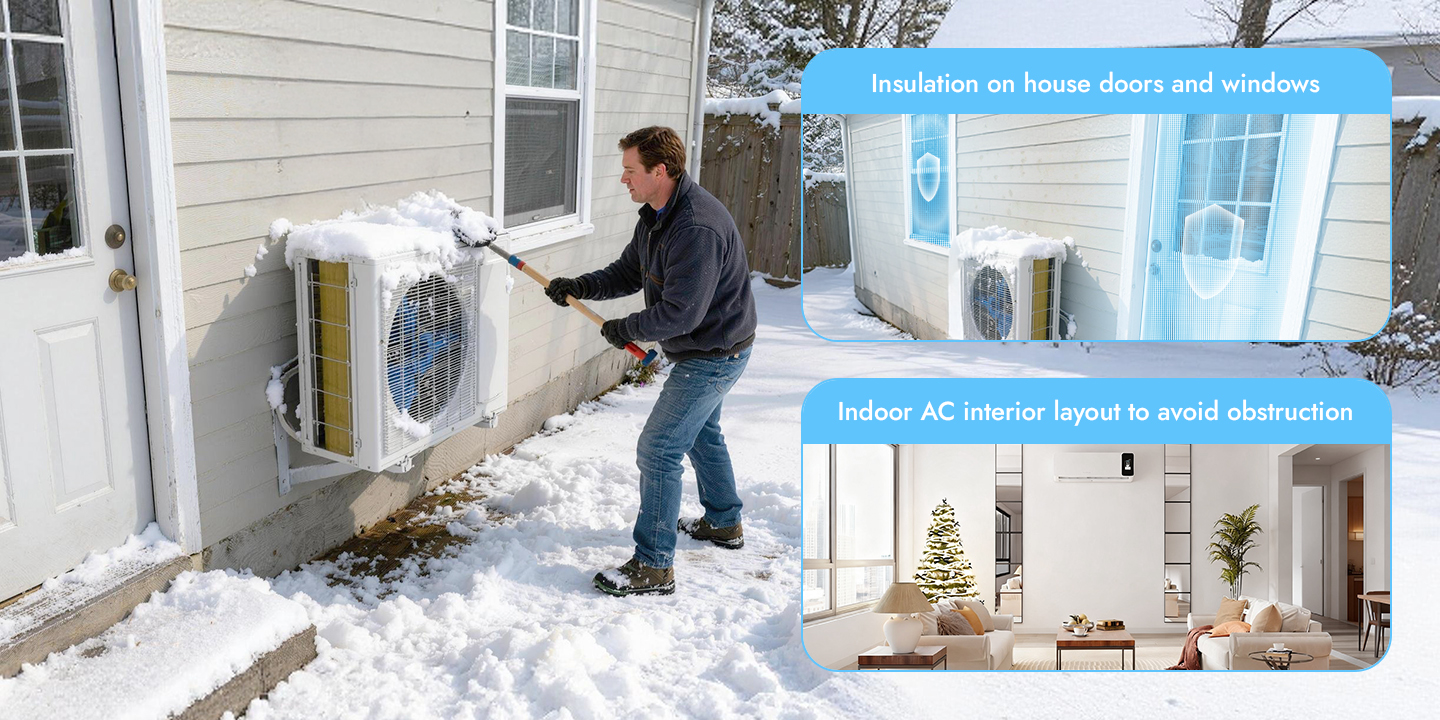
Remove snow around the outdoor unit after a snowfall.
Keep at least 2–3 feet of space around it.
Never use tools to knock ice off the unit—this may damage the coil.
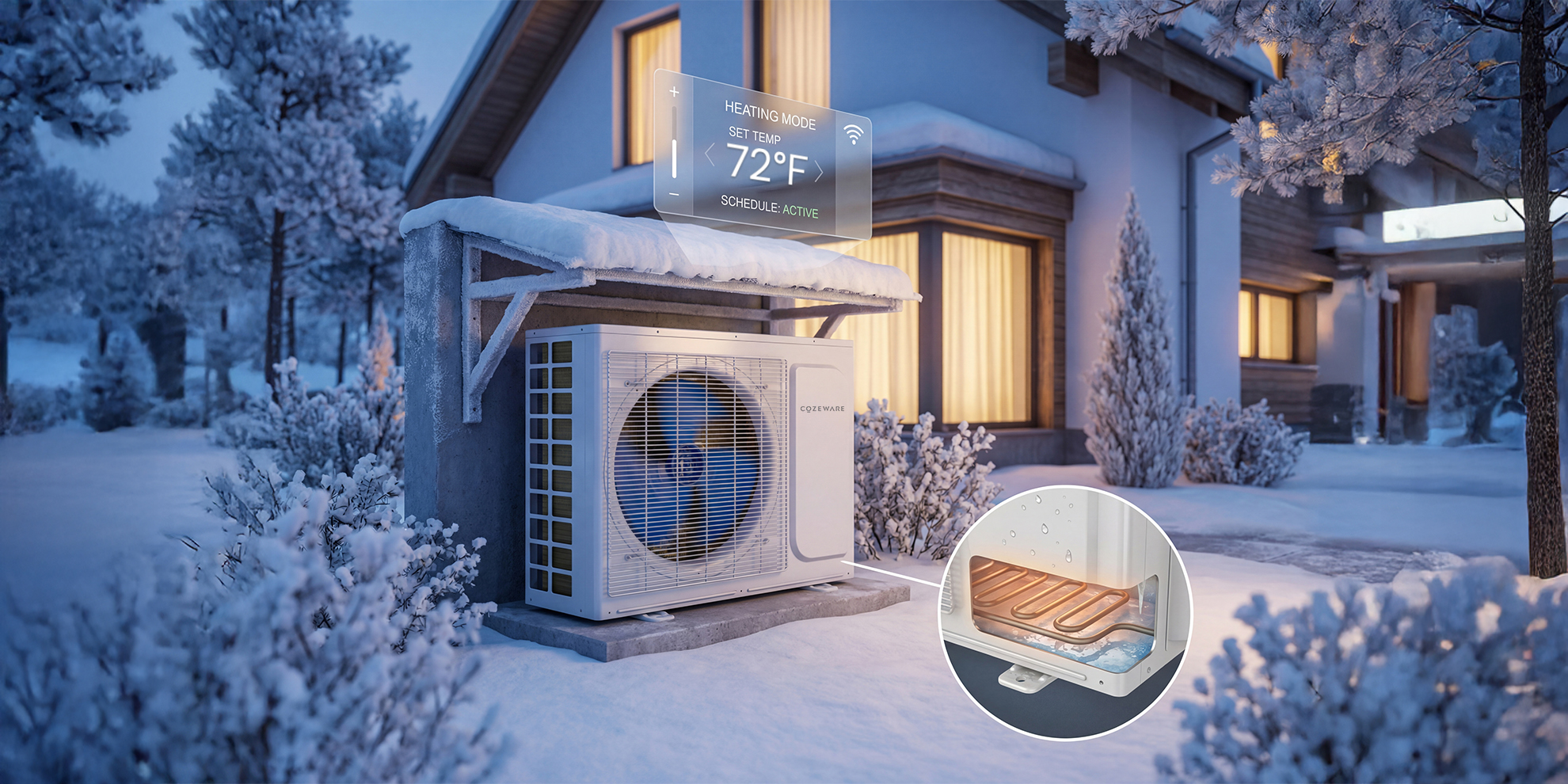
If your area receives heavy snow, consider installing an outdoor snow guard or awning.
(3) Understand the Defrost Cycle
Indoor heating may pause for a few minutes.
Outdoor unit may blow steam—this is normal.
Supplemental heat (like space heaters) is only recommended when temperatures drop below -10°F.
(4) Choose the Right Fan Speed
Use Auto or Medium fan speed for stable warmth.
Avoid high fan speed during startup to prevent cool drafts.
(5) Reduce Heat Loss Indoors
Seal window and door gaps.
Use thermal curtains.
Make sure indoor units aren’t blocked by furniture.
For garages or basements, ensure basic insulation—mini splits can’t compensate for extreme heat loss.
3. Add-Ons That Improve Winter Heating Performance
Basepan heater – prevents ice buildup on the outdoor unit.
Compressor insulation blanket – improves efficiency in extreme cold.
Outdoor snow cover – protects from snowfall.
Smart thermostat/controller – keeps temperatures more stable.
Surge protector – protects the system during winter storms.
4. When to Call a Professional
Contact a technician if you notice:
Ice that does not melt even after multiple defrost cycles
Loud, unusual noises
The unit shutting off repeatedly
Weak airflow despite clean filters
Dramatically reduced heating performance
Conclusion
Mini split heat pumps are a reliable, efficient heating solution—even in cold U.S. winters. By choosing the right settings, maintaining your system, and keeping the outdoor unit clear, you can enjoy warm, comfortable heating throughout the entire season.
With a few smart steps, your mini split will remain:
✔ Efficient
✔ Quiet
✔ Reliable
✔ Winter-ready